

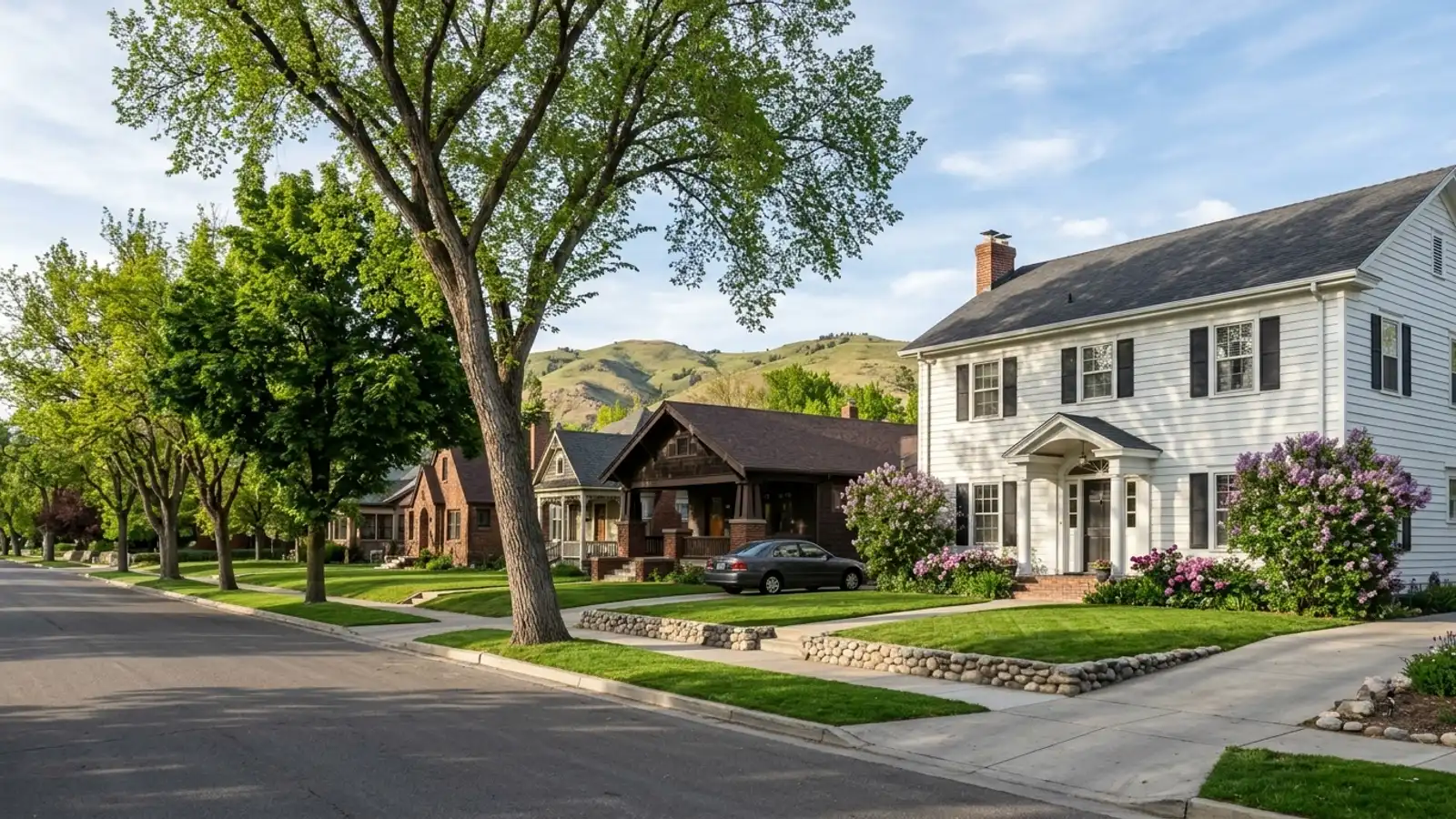
The East End’s premium over Boise is mostly about bigger houses, not pricier square footage.
Key takeaway
The East End gives you more house for the premium if two things are true:
- your budget reaches the high $800,000s
- you can bid at or above asking.
That price is roughly its single-family median, based on just 19 sales. Much of the gap with Boise reflects larger homes rather than costlier square footage. The North End has no neighborhood figure in our data, so compare it on recent sold homes. Alternatively, look to the Bench as the closest-in alternative with lower prices per square foot.
Who this guide is for
You’re shopping for a home close to downtown Boise and need to decide whether the East End or the North End belongs at the top of your shortlist.
East End vs North End: what’s the difference?
Both neighborhoods sit close to downtown Boise but deliver different housing. Check a Boise zip code map to confirm which neighborhood a listing falls in. Buyers expanding their search can review profiles of popular Boise neighborhoods.
East End
The East End is defined by older homes along Warm Springs Avenue. Some are heated with natural hot water piped from the foothills through the Boise Warm Springs Water District. Geothermal service is address-specific, so ask the seller for utility bills and confirm the connection rather than assuming it exists.
North End
The North End‘s historic architecture is anchored by Harrison Boulevard. Residents also have Hyde Park, a historic commercial district known for locally owned eateries and shops on North 13th Street.
Our data does not track the North End as its own neighborhood, so you give up a clean, neighborhood-level median to anchor your offer. Before setting a price range, pull single-family sold comps from the last 90 days for the specific streets you’re considering.
East End and North End home prices
Price per square foot and home size
Boise’s single-family median is $554,779, based on 734 sales. The East End’s single-family median is $890,852, about 60% higher. Its price per square foot, $410, runs only about 26% above the citywide $326, because East End homes tend to be bigger.
Those East End figures rest on just 19 sales. One estate sale can move the median. In the same period, the all-homes figure jumped 12.9% (21 sales) while single-family rose 4.9% (19 sales). Treat the numbers as direction rather than a precise price, and set a North End street’s sold comps against them.
Bidding and days on market
The East End had 13 single-family homes listed, about two months of supply. That is more supply relative to sales than the city’s, so you may wait weeks for the right property.
The looser inventory doesn’t buy you negotiating room. East End homes sold above list 36.7% of the time, compared to 27.4% citywide. Plan your financing and appraisal-gap cash for an at-or-over-ask offer.
Because that above-list rate comes from only 19 sales, ask your agent for list-to-sale history on the specific street, not just the neighborhood. Do the same for the North End.
Pros and cons of historic homes near the foothills
Historic district rules
Harrison Boulevard in the North End and Warm Springs Avenue in the East End are designated local historic districts, which protects their streetscapes from incompatible development. Under the Boise Development Code, a Certificate of Appropriateness is required for alterations in historic districts. Windows, additions and exterior materials may need sign-off from the Historic Preservation Commission or city staff before work starts.
That means an extra layer of review and potential costs. Ask the City of Boise planning or historic preservation office whether a specific address sits in a historic district before you budget a renovation.
Older homes and upkeep
These neighborhoods get their character from their age. With it comes deferred-maintenance risk in sewer lines, electrical systems and foundations. Order a sewer scope and ask for permit and repair history on any older home before you finalize your purchase.
Foothills and trail access
Both neighborhoods sit near Ridge to Rivers trailheads, putting daily hikes and mountain bike rides within easy reach.
Building or modifying a home in the city’s mapped wildland-urban interface areas brings fire-code requirements:
- ignition-resistant materials
- Class A roof coverings
- setback and vegetation-clearance standards.
Check whether the parcel falls in those areas, and get a homeowners insurance quote before your inspection period ends.
How to choose between the East End and North End
Start with budget. If it sits near the East End’s single-family median, read the price section. If it sits closer to Boise’s, go to the nearby alternatives below.
Next, decide if you can offer at or above asking on one of a dozen or so listings. If not, read the bidding section before touring, and compare with Collister, where single-family prices dipped.
If you plan to change the exterior, add on or replace windows, read the historic district rules. Confirm whether the address sits in a district before you write an offer.
If trail access from your door is a priority, weigh it against the wildfire rules that come with it.
Comparing recent sold comps in both neighborhoods will help you find the right fit, and if you’re moving from out of state, buying remotely is something worth planning for early.
Nearby alternatives to the East End and North End
Boise Bench
The Bench has the lowest price per square foot of the areas covered here. Single-family homes sold at a median of $273 per square foot, based on 40 sales, so the same budget buys meaningfully more space than in the East End.
The catch is supply, the tightest of any area here at 1.1 months. Good listings go fast despite the low per-foot price.
Collister
Collister is where prices have eased. Single-family values fell 5% year over year, based on 30 sales, which gives buyers some room on price.
The catch is speed. Homes still sold in a median of 8 days, so room on price doesn’t mean room on time. Be ready to move quickly.
At a glance
- East End single-family median sale price: $890,852 (based on 19 sales, 90 days ending 2026-09-30)
- East End single-family median price per square foot: $410 (19 sales, 90 days ending 2026-09-30)
- East End single-family sale-to-list ratio: 100.4%; sold above list: 36.7% (19 sales, 90 days ending 2026-09-30)
- East End single-family median days on market: 11 (19 sales, 90 days ending 2026-09-30)
- East End single-family year-over-year price change: +4.9% (19 sales, 90 days ending 2026-09-30)
- East End single-family homes listed: 13, or 2 months of supply (90 days ending 2026-09-30)
- East End all homes: 21 sales, median $874,755, +12.9% year over year (90 days ending 2026-09-30; small sample, so expect swings)
- Boise single-family median sale price: $554,779; $326 per square foot; 27.4% sold above list; 1.3 months of supply (734 sales, 90 days ending 2026-09-30)
- Boise Bench single-family median sale price: $514,914; $273 per square foot; +8.4% year over year; 1.1 months of supply (40 sales, 90 days ending 2026-09-30)
- Collister single-family median sale price: $549,909; -5% year over year; 8 median days on market; 37.8% sold above list (30 sales, 90 days ending 2026-09-30)
East End vs North End Boise FAQs
Is the East End in Boise safe?
The Boise Police Department’s Police Transparency Hub offers crime statistics and interactive maps. Review it for the specific address rather than relying on neighborhood reputation.
Is the North End a good place to buy a home?
It suits buyers who want older, historic homes near Hyde Park and can accept historic review on many streets. With no neighborhood median, judge any home on its street’s recent sold comps.
Do I need city approval to renovate a house in a Boise historic district?
Yes. A Certificate of Appropriateness is required before work starts on any address in a historic district.
How far are the East End and North End from downtown Boise?
Both sit very close to the downtown core. Before making an offer, drive from the house to your workplace at your actual commute time and check which bus routes serve the street.
Which schools serve East End and North End homes?
Look up assigned schools for the exact address using the Boise School District locator. Confirm before writing an offer, since boundaries can change.
Can you buy a condo or townhouse in the East End?
Condos and townhomes are rare in the East End. Of 21 East End sales in the 90 days ending September 30, 2026, 19 were single-family homes, leaving only about two attached properties. For attached housing, widen your search to other parts of Boise and check recent attached-home sales for the North End.
Social Cookies
Social Cookies are used to enable you to share pages and content you find interesting throughout the website through third-party social networking or other websites (including, potentially for advertising purposes related to social networking).