

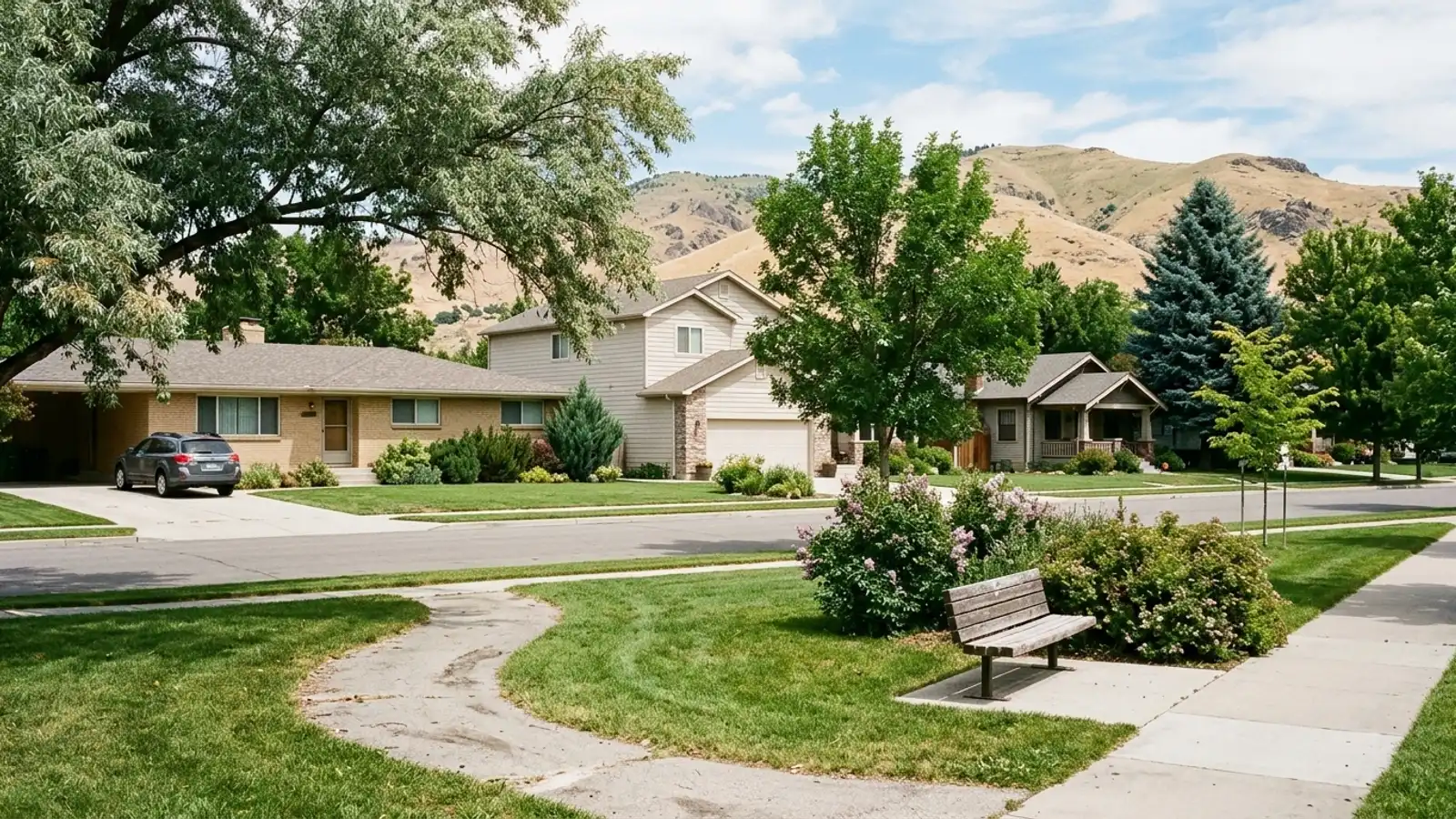
Homes in Boise, ID are currently selling in a median of 12 days on the market. If you’re relocating to Boise and waiting for a weekend flight to tour properties, you’ll likely miss the ones you actually want.
Purchasing a house without walking through the front door requires a structured approach to viewing, inspecting, and closing. With a median sale price around $544,640, you’re making a substantial financial commitment from a distance – that’s not something you want to improvise.
Working through this process means relying on local professionals to act as your eyes and ears. This guide covers how to evaluate properties, protect your earnest money, and close on a Treasure Valley home without being physically present.
Remote Home Buying Trends in Ada County
There are currently about 401 homes available in active inventory across the Boise area, and out-of-state buyers are competing for those listings right alongside local residents. When a well-priced home hits the market, someone down the street can tour it the same afternoon. You can’t – so your tools and your team have to make up the difference.
The market moves quickly. Average sale-to-list ratios hover near 99.7%, and nearly 30% of homes sell above list price. You should be prepared to submit a strong, competitive offer even if you’ve never stepped inside the house.
Steps for Purchasing a Property from Afar
Buyers in the Boise market typically put down 1% to 3% of the purchase price as an earnest money deposit. On a median-priced home, that translates to roughly $5,400 to $16,300. There’s no state-mandated amount in Idaho – these figures are set by local custom and negotiation. In competitive situations, buyers sometimes offer flat amounts of $5,000 to $20,000 or more to strengthen their position. Once the seller accepts your offer, you’ll wire those funds directly to the title company.
Moving from an accepted offer to a successful closing requires coordinating several moving parts from another state. The right local team handles the logistics while keeping you informed through video calls and digital document signing.
Choosing a Local Real Estate Agent
Your agent is your primary advocate on the ground, and they need to understand your specific requirements and be willing to visit properties on short notice. A good local agent will catch things that listing photos don’t show – neighborhood traffic patterns, the condition of neighboring properties, whether there’s an odor inside the house that no virtual tour will ever tell you about.
Reviewing Virtual Tours and Live Walkthroughs
National real estate portals often feature polished 3D walkthroughs that make rooms look bright and spacious. They’re useful for understanding a floor plan. They’re not the whole story.
Ask your agent for an unfiltered, live video walkthrough. During that call, have them open closets, check water pressure, and point the camera at the ceiling to look for water stains. Step outside, too – you want to see the street and the immediate surroundings, not just the staged interior.
Handling Earnest Money and Escrow Remotely
Once your offer is accepted, you’ll deposit your earnest money with the escrow company via wire transfer. Wire fraud is a persistent threat in real estate transactions. Before you send anything, call the title company at a verified phone number to confirm the wiring instructions. Don’t trust emailed instructions without verbal verification first.
Reducing Risk on an Unseen Property
This is where Boise has some specifics worth paying attention to. Over 30% of tested homes in Boise exceed the EPA action level for radon of 4.0 pCi/L, with some areas testing above 10 pCi/L. The EPA designates the region as Zone 1 – meaning there’s a high probability of elevated indoor radon levels.
Wildfire exposure is the other significant factor. Redfin data shows 100% of Boise Foothills properties have some wildfire exposure over a 30-year period, with wind-driven embers as the primary ignition threat in the wildland-urban interface. Post-wildfire conditions also elevate flood and debris flow risk for several years as vegetation regrows – similar to what occurred after the 2024 Valley Fire. In Foothills neighborhoods specifically, about 21% of properties are at risk of severe flooding over 30 years.
These aren’t reasons to avoid the area. They are reasons to get professional evaluations before you finalize anything.
Scheduling the Home Inspection
An independent, licensed home inspector is your best defense against repair surprises. Boise homes frequently experience crawlspace moisture due to seasonal groundwater shifts, spring snowmelt, and clay soils – that moisture can lead to mold, wood rot, and damaged insulation. HVAC issues are also common given the area’s extreme seasonal temperature swings; inspectors routinely find dirty filters, undersized systems, and leaky ductwork.
You’ll receive a detailed digital report with photos. Read it carefully, and don’t hesitate to ask your agent to walk through it with you before you decide whether to request repairs or walk away.
Reviewing Idaho Property Disclosures
The Idaho Property Condition Disclosure Act requires sellers of residential properties with one to four dwelling units to complete a statutory disclosure form. It covers physical conditions like the foundation, drainage, septic systems, and structural integrity, along with title issues and known hazardous materials.
The seller must deliver this form within 10 days of accepting your offer. Once you receive it, you have a three-business-day right to rescind the contract. If new information surfaces before closing, the seller is required to amend the form.
Writing Contingencies Into Your Offer
Standard contracts include contingencies that let you cancel under specific conditions. A sight-unseen contingency gives you a defined window to visit the property in person and approve it. If you can’t travel to Boise at all, you’ll lean on the inspection and financing contingencies instead – those protect your earnest money if the home has severe defects or your lender denies the loan.
Closing on a Boise Home from Another State
Idaho legalized Remote Online Notarization (RON) when Governor Brad Little signed Senate Bill 1111, which took effect on January 1, 2020. The law allows Idaho-commissioned notaries to perform online notarizations for signers located anywhere in the world, with one requirement: the notary must remain physically within Idaho during the notarial act.
That means you don’t have to fly into the Treasure Valley just to sign a stack of paper documents on closing day.
Signing With Remote Online Notarization
With RON, you’ll log into a secure digital platform, meet the notary via webcam, answer identity verification questions, and electronically sign your loan and title documents. It’s fast. Your lender and title company receive the signed documents immediately, which keeps your closing timeline on track.
Using Mobile Notaries and Mail-Away Closings
If your lender doesn’t allow electronic signatures for certain loan documents, you’ll use a mail-away closing instead. The title company overnights the physical paperwork to your location, you hire a local mobile notary to witness your signatures, and then you overnight the signed package back to the title company in Boise for recording. It adds a day or two, but it works.
Frequently Asked Questions
Is it safe to buy a house in Boise without seeing it in person?
Yes, generally – if you use contingencies and hire the right professionals. An independent home inspection covers issues like crawlspace moisture and HVAC problems, and the mandatory Idaho seller disclosures provide an additional layer of protection regarding the home’s known condition.
How do appraisals and inspections work when buying sight unseen in Boise?
Exactly the same as a traditional purchase. Your lender orders the appraisal, and your agent helps you schedule a local home inspector. You’ll receive a detailed digital report with photos and notes covering items like radon levels and structural integrity.
Can I back out of a sight unseen home purchase in Idaho?
Yes, if your contract includes the appropriate contingencies. Idaho law gives you a three-business-day right to rescind after receiving the seller’s property condition disclosure form. Inspection and financing contingencies also provide legal avenues to cancel the purchase.
How do I handle the final walkthrough and closing paperwork remotely for a Boise property?
Your local agent conducts the final walkthrough on your behalf, often via live video call. For paperwork, you can sign electronically using Remote Online Notarization, which has been legal in Idaho since 2020. If your lender requires physical signatures, a mobile notary in your current city takes care of it.
How can I evaluate Boise neighborhoods and commute times without visiting in person?
Have your agent show you the street and surrounding areas during a live video tour. They can speak to local traffic patterns and proximity to amenities. You should also review data on specific local risks – including the moderate flood risk and extreme wildfire exposure in the Boise Foothills.
Are there extra costs or fees associated with closing on a house remotely in Idaho?
Usually a few minor ones. A mobile notary charges a service fee, and you’ll pay for overnight shipping to send documents back to Boise. RON platforms charge a fee as well, though it’s typically comparable to traditional notary costs.
Social Cookies
Social Cookies are used to enable you to share pages and content you find interesting throughout the website through third-party social networking or other websites (including, potentially for advertising purposes related to social networking).