

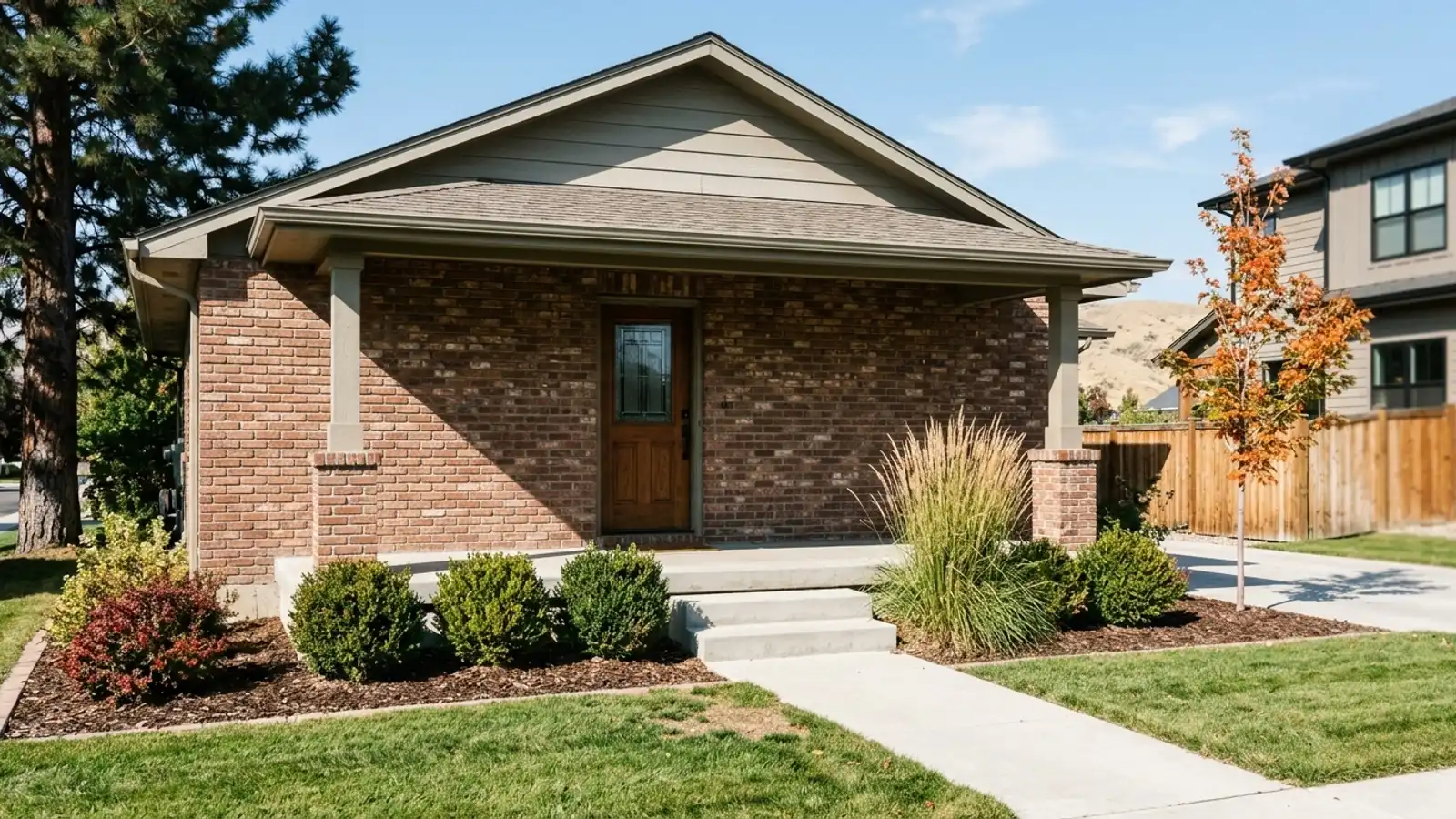
The median home price in Eagle, ID, currently sits at $899,572, up 12.5% from a year ago. That double-digit jump catches a lot of buyers off guard when they first look at the area.
It mostly reflects a sales mix tilted toward larger, more expensive properties rather than a flat increase across the board. When you look closely at the cost of living in Eagle, ID, housing is your largest expense, and your budget depends almost entirely on the type of property you buy.
Key Takeaway
Eagle’s cost of living comes down to which kind of home you buy. Townhouses (27 sales) sold at a median well under half the single-family figure over the 90 days ending September 30, 2026, and none went over asking. If you need a detached home, plan to pay close to full list price in a tight market. If you can live with shared walls and HOA dues, a townhouse cuts your biggest monthly cost roughly in half.
Who This Guide Is For
You are considering a move to Eagle and need to know what a home and the monthly bills will cost before you set a budget.
How Much Does It Cost to Live in Eagle, Idaho?
In Eagle, the cost of living is largely a choice of home type. The overall median price rose more than the segment figures suggest, because single-family homes rose 8% and townhouses (27 sales) just 1.4% year over year. The headline jump mostly reflects more expensive homes making up a bigger share of recent sales, rather than what you will pay for either property type.
You won’t find a generic cost-of-living index score here, because those sites average away the massive price split between detached houses and attached units. Instead, check our Eagle housing market outlook to see where values are heading, and review the detailed breakdown below to see what your money buys.
Single-Family Homes vs Townhouses in Eagle
Single-family homes make up the vast majority of what sells in Eagle, accounting for 280 of the 310 sales over the 90 days ending September 30, 2026. That dominant share dictates the overall market pace. Townhouses, though, tell a completely different financial story.
Paying for land and a detached home means shopping in a market that favors sellers. Attached units give buyers much more choice. The price gap between these two brackets determines your actual local housing costs.
Single-Family Homes
Single-family homes in Eagle command a median price of $997,053. With only 2.6 months of supply available, a well-priced home in a popular subdivision often draws more than one offer, and nearly one in five single-family homes sold for more than asking price in the latest 90 days.
A ready pre-approval and a firm number matter more here than a low opening offer. You can review subdivision prices in the best Eagle neighborhoods to see how specific locations compare. Negotiating room is thin, so budget to pay close to list price and keep some cushion for a competing offer rather than counting on a discount.
Townhouses
Townhouses offer the lowest entry price into Eagle home ownership, with room to negotiate. Based on 27 townhouse sales, the median price sits at $460,455. The market here favors buyers, carrying 5.6 months of supply, and not one of those 27 townhouses sold for more than its asking price.
That extra inventory means you can tour several units, take time on inspections, and negotiate on terms like repairs or closing dates even if the price lands near list. You can explore different condo and HOA structures in our guide to the types of homes in Eagle.
What you give up is control over the exterior, and HOA dues are a monthly cost that single-family comparisons often leave out. Dues vary by community, so ask the HOA for current figures, what they cover, and any planned special assessments before you compare a townhouse budget to a detached one. Worth knowing: the extra choice you get as a buyer here is the same slow absorption you’ll face when you sell.
Monthly Housing Cost Example
A single-family buyer at the median price takes on a $797,642 loan, while a townhouse buyer finances $368,364, assuming a 20% down payment.
Applying the 30-year fixed-rate mortgage average of 7.24% for the week ending October 29, 2026, the principal and interest payment on the single-family home is substantially higher than the townhouse payment. That gap drives the cost of living for most residents. You can review current loan types and buying power on our Eagle mortgage rates page, and estimate your cash to close on our buyer closing costs guide.
Space per dollar shifts dramatically between the two as well. Single-family homes recently traded at a median of $350 per square foot, while townhouses traded at $250. An 1,800-square-foot home works out to about $630,000 detached versus $450,000 attached. Property tax, insurance, and HOA dues come on top of those figures.
Taxes in Eagle, Idaho
Idaho has a flat 5.30% individual income tax rate for 2026, alongside a state sales tax described below. Local taxes determine how much of your paycheck stays in your pocket after the mortgage is paid.
These figures rely on official state and county rates. Because tax bills depend on your specific property and income, you should confirm your personal situation with a tax professional.
Property Tax
The homeowner’s exemption changes the property tax bill the most for an owner-occupant in Eagle. For 2026, the maximum exemption remains $125,000, which applies to 50% of the home’s value or up to one acre, whichever is less. Under HB 843 enacted this year, proration was eliminated, meaning a claimant must file before the close of business on the last business day of the calendar year to receive the full exemption for that year.
Because the Eagle tax code area levy rate updates annually, look up the specific parcel on the Ada County Assessor’s site for its assessed value and current bill. Idaho’s homeowner’s exemption isn’t automatic: you have to apply with the county assessor to get it.
The exemption covers only your primary residence. A second home or rental pays on its full assessed value, and assessments follow market values, so the seller’s current bill may not match yours.
Sales and Income Tax
Idaho charges a state sales tax rate of 6%. Eagle does not impose a local option or resort tax, keeping the combined rate at that same level. Idaho taxes groceries, unlike most states.
The 5.30% flat income tax rate noted above applies to all Idaho filers. For households moving from a high-tax state, this flat rate often provides a predictable, lower burden. Buyers coming from a no-income-tax state will need to adjust their take-home pay calculations. The grocery tax hits every week, and the offsetting credit only comes back when you file your state return, so budget for groceries at the taxed price rather than the net price.
Utilities and Everyday Costs
Eagle residents face a 6.02% higher baseline natural gas bill and a 3.16% higher electric rate in 2026 compared to late 2025. Larger single-family homes naturally cost more to heat and cool than townhouses with shared walls.
Regulators approve baseline utility rates, but usage drives the final bill. Ask the seller for 12 months of electric, gas, water, sewer, and trash bills to see the true seasonal pattern.
Utilities and Heating
Electricity in Eagle comes from Idaho Power, which implemented a 13.09% base-rate increase on January 1, 2026, followed by a further increase effective June 1, 2026, for residential standard plans. For natural gas, the Intermountain Gas residential customer’s monthly bill increased by an average of $2.45 at the start of 2026, with the monthly residential customer charge rising to $11.00.
Water, sewer, and trash services depend entirely on the provider serving the address. Get a homeowners insurance quote for the specific address before you make an offer. Water and pressurized irrigation vary by subdivision and provider, and irrigation assessments can show up on a separate bill, so ask the seller for 12 months of utility bills and confirm which water, sewer, and irrigation providers serve the address.
Transportation and Commuting
The mean travel time to work for residents in the city of Eagle is 23.7 minutes. For most households, a car is a mandatory part of the budget, requiring fuel, insurance, and often a second vehicle depending on where you work.
The cost depends on where in Eagle you live and where you drive each day. You can weigh the broader lifestyle trade-offs on our pros and cons of living in Eagle page. Time your actual commute from the address at rush hour, both directions, before you treat a cheaper listing farther out as a saving.
How to Estimate Your Own Cost of Living in Eagle
A townhouse buyer financing $368,364 at 7.24% builds a very different monthly budget than a single-family buyer financing $797,642. To estimate your total monthly output, start with the principal and interest payment from the median price of your chosen property type, then work through these questions:
- Do you need a detached home with a yard, or would shared walls work? If shared walls are fine, start with townhouses. If not, plan to pay near list price for a single-family home.
- Is your purchase budget closer to $500,000 or $1 million? The median prices show what each bracket means per month.
- Will this be your primary residence? If not, the homeowner’s exemption won’t apply and your tax bill will be noticeably higher.
- How far will you drive each day, and in which direction? The commute is a real line item in an Eagle budget.
Next, add the property tax estimate based on the county assessor’s site, factoring in the homeowner’s exemption if eligible. Then add HOA dues, utilities based on the seller’s past bills, and your cash to close. Traci Odem can pull recent sales for a specific subdivision or unit type to help you narrow down the exact numbers. You can also explore the most expensive areas in Eagle to see the upper end of the market. Confirm the current mortgage rate and your payment with your own lender, as the examples above use a published national average.
At a Glance
- Median sale price, all homes: $899,572, up 12.5% year over year (310 sales, 90 days ending Sept. 30, 2026)
- Median sale price, single-family: $997,053, up 8% year over year (280 sales, 90 days ending Sept. 30, 2026)
- Median sale price, townhouse: $460,455, up 1.4% year over year (based on 27 sales, so treat with caution; 90 days ending Sept. 30, 2026)
- Median price per square foot: single-family $350, townhouse $250 (27 sales), all homes $345 (90 days ending Sept. 30, 2026)
- Median days on market: single-family 66, townhouse 80 (27 sales), all homes 70 (90 days ending Sept. 30, 2026)
- Sale-to-list ratio: 99% for single-family, townhouse (27 sales) and all homes (90 days ending Sept. 30, 2026)
- Share sold above list price: single-family 18.1%, townhouse 0% (27 sales), all homes 16.4% (90 days ending Sept. 30, 2026)
- Months of supply: single-family 2.6, townhouse 5.6 (27 sales), all homes 2.9 (90 days ending Sept. 30, 2026)
- Homes for sale (inventory): single-family 237, townhouse 49, all homes 296 (90 days ending Sept. 30, 2026)
Eagle, Idaho Cost of Living FAQs
How Much Money Do You Need to Live in Eagle, Idaho?
The living wage for a single adult with no children in Ada County is $25.00 per hour, assuming full-time work. Households with children or additional working adults require a higher baseline income. Because Eagle housing runs above the county-wide baseline, add the monthly housing payment from the worked example above to this figure.
What Is the Median Household Income in Eagle, Idaho?
You can check the U.S. Census Bureau’s American Community Survey for the most recent median household income in Eagle. That figure describes city-wide income distribution, not what any specific buyer needs to qualify. Lenders size loans based on your own personal income and debts, not the city average.
What Income Counts as Middle Class in Eagle, Idaho?
The Pew Research Center defines middle class as earning between two-thirds and double the median household income. To find the current middle-class range for Eagle, apply that calculation to the latest Census American Community Survey median income figure.
Is Eagle, Idaho a Wealthy Area?
Eagle’s all-homes median sale price over the 90 days ending September 30, 2026 is higher than the broader metro area. By comparison, the Boise metro-wide median sales price was $595,000 in August 2026. This price gap makes Eagle one of the more expensive housing markets in Ada County.
How Much Is Rent in Eagle, Idaho?
You can find the historical median gross rent for the city through the Census American Community Survey. Survey figures typically lag behind current asking rents, so check current local rental listings for the specific unit type you want to get an accurate monthly estimate.
Does Idaho Tax Groceries?
Yes, Idaho taxes groceries at the state sales tax rate of 6%. The state offers a grocery credit to offset this cost, which you claim when you file your state income tax return. You can check the Idaho State Tax Commission for the current grocery credit amount per person.
What Are Winters Like in Eagle, Idaho?
Winters are cold, with the nearby Boise Air Terminal recording a January normal high temperature of 38.8°F, a normal low of 25.5°F, and a normal mean temperature of 32.2°F. The area averages around 20 inches of snowfall per year. Because winter heating runs on natural gas for many homes, ask the seller for their past winter utility bills.
Does Eagle Island State Park Charge an Entrance Fee?
Yes, Eagle Island State Park charges a Motor Vehicle Entrance Fee of $7.00 per vehicle. This fee is waived for vehicles displaying a valid Idaho State Parks Passport, which you can purchase with your Idaho vehicle registration. Check the park’s official page for current hours and seasonal closures.
Sources
- Redfin: Data Center
- GlobeNewswire: Freddie Mac Primary Mortgage Market Survey
- Idaho State Tax Commission: 2026 Maximum Homeowner’s Exemption
- Sale-Tax.com: Eagle, ID Sales Tax Rate
- Tax Foundation: Idaho Individual Income Tax Rate
- Idaho Power: Schedule 1 Residential Standard Plan
- Idaho Public Utilities Commission: Intermountain Gas Rate Change
- U.S. Census Bureau: Eagle City, Idaho QuickFacts
- MIT Living Wage Calculator: Ada County, Idaho
- NOAA NCEI: Climate Normals for Boise Air Terminal
- National Weather Service: Boise Climate Summary
- Idaho Parks and Recreation: Eagle Island State Park
- Boise Regional REALTORS: August 2026 Market Report
Social Cookies
Social Cookies are used to enable you to share pages and content you find interesting throughout the website through third-party social networking or other websites (including, potentially for advertising purposes related to social networking).