

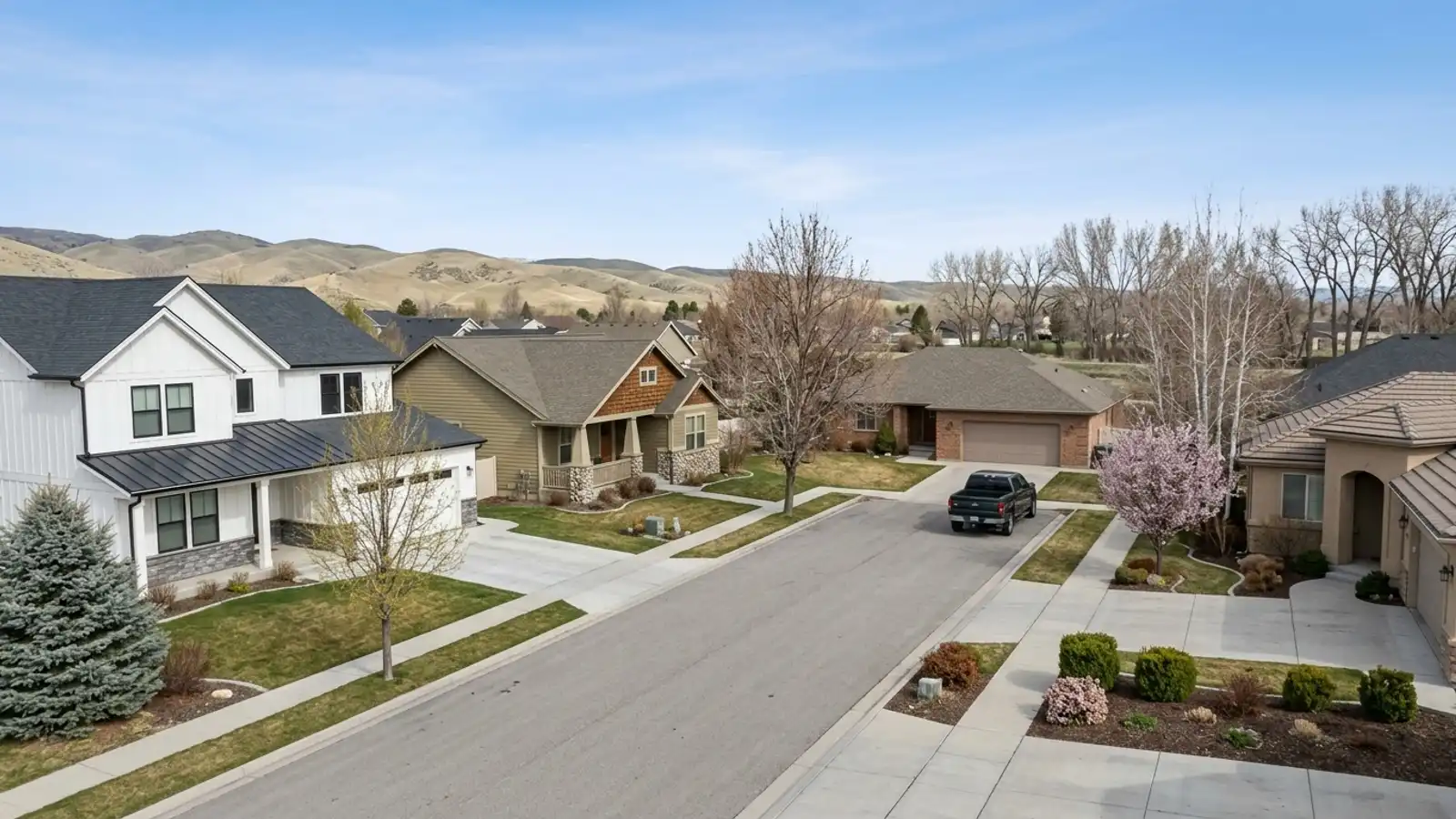
The median sale price in Eagle, ID currently sits around $940,500. At that price point, your borrowing cost is just as consequential as what you’re paying for the house itself. Keep this in mind when you choose a buyer’s agent in Eagle, ID.
A fractional shift in interest rate changes your monthly payment and dictates how much home you can afford. Sellers feel it too – borrowing costs directly influence how many qualified buyers are actively touring homes in Ada County.
Understanding Mortgage Rates in Eagle, ID
Rates change daily, and sometimes multiple times a day. Lenders price their loans off complex financial markets – primarily the bond market and mortgage-backed securities – not off anything specific to Eagle or Ada County.
That’s why a generic online search won’t give you a number you can use. The only figure that means anything is the one tied to your specific profile and a specific property, on a specific day. The only way to get that is to request a same-day quote or a formal document from a lender directly.
Where to Find Your Exact Rate
Ask a lender for a Loan Estimate. That’s a standardized document that spells out the exact interest rate, monthly payment, and closing costs for a specific loan offer – not a ballpark, not a teaser. It’s built around your financial profile and the property you’re trying to buy. Until you have that document in hand, any rate you see advertised is just a marketing number.
How Interest Rates Affect Your Buying Power
With a recent median sale price around $940,500, financing a home in Eagle means even a half-percent rate difference shifts your monthly payment by hundreds of dollars. That’s not a rounding error – that’s a real constraint on what you can afford.
Buyers end up having to choose: adjust the purchase price down, or absorb a higher payment. If rates move while you’re still shopping, a home that fit your budget last month can quietly drift out of reach.
Comparing Monthly Payments
Here’s a concrete illustration of how fast the math moves. For illustration only: on a $750,000 loan at 6%, your monthly principal and interest payment comes to about $4,496. Bump that rate to 7% on the same loan and you’re looking at around $4,989 per month.
That’s nearly $500 more every month for the exact same house. Which is why tracking your rate matters just as much as tracking the listing price.
Loan Types and How They Shape Your Rate
The loan product you choose has a direct effect on your borrowing costs – this isn’t a secondary decision. Each program comes with its own requirements around credit scores, down payments, and property types, and those requirements translate into different pricing.
Government-backed loans – FHA, VA, and USDA products – often advertise lower base rates than conventional loans. But buyers need to factor in the mortgage insurance premiums those programs require, which can offset the rate advantage in ways that aren’t obvious upfront.
Fixed-Rate vs. Adjustable-Rate Mortgages
A 30-year fixed-rate mortgage keeps your principal and interest payment identical for three decades – no surprises. A 15-year fixed works the same way but typically comes with a lower rate in exchange for a higher monthly payment.
Adjustable-rate mortgages, or ARMs, open with a lower fixed rate for an introductory period – usually five to seven years. After that, the rate adjusts annually based on market conditions. Your payment can go down, but it can also go up.
Getting the Lowest Possible Rate for Your Home Purchase
Lenders save their best pricing for borrowers who look least risky on paper. Your personal financial profile – credit score, down payment, debt load – carries more weight than any broader rate environment when a lender is putting together your specific offer.
Comparing quotes from multiple lenders matters more than most buyers realize. A fraction of a percent saved on a mortgage at this price point translates to tens of thousands of dollars over the life of the loan.
Improving Your Financial Profile
A higher credit score generally unlocks better pricing. If you’re not in a rush, pull your credit reports months before you apply, fix any errors, and give yourself time to land in the highest scoring tier you can reach.
A larger down payment reduces the lender’s risk and often produces a more favorable rate. You can also pay discount points at closing – upfront fees that permanently buy down your interest rate for the life of the loan.
Using a Rate Lock
A rate lock is a lender’s commitment that your rate won’t move for a set window – typically 30 to 60 days. It protects you from a market spike while your contract is being finalized. Most buyers lock once they have an accepted offer.
If rates drop after you lock, some lenders offer a float-down option. That usually comes with specific conditions or fees, so read the fine print before you count on it.
Choosing a Local Mortgage Lender in Ada County
National call-center lenders process high volumes, but they often don’t know much about Ada County – local property taxes, appraisal timelines, or how HOA structures vary by neighborhood. A local lender does.
It also matters when you’re writing an offer. Listing agents in Eagle know which lenders close reliably and on time. A pre-approval letter from a recognized local lender can carry real weight in a multiple-offer situation.
Types of Lenders to Consider
Retail banks and credit unions lend their own money and offer their own loan products. If you already have a relationship with a local credit union, ask specifically about portfolio loans or relationship pricing – those exist and aren’t always advertised.
Mortgage brokers don’t lend directly; they shop your application across dozens of wholesale lenders to find the best terms available. Direct lenders work similarly to banks but focus exclusively on mortgages, which often means faster underwriting.
What Rate Trends Mean for Eagle Sellers
Buyer demand is tightly tied to monthly payment affordability. When rates trend down, buyers gain purchasing power – you see more showings, faster movement, stronger offers.
Homes in Eagle recently averaged about 59 days on the market. If borrowing costs climb, some buyers pause their search entirely or pull their ceiling price down, and that extra time starts showing up in your days-on-market number.
Pricing Your Home for the Current Market
Pricing off comparable sales from a different rate environment is a real risk. Buyers are shopping their monthly payment, not just your list price. Overpricing when borrowing costs are elevated tends to produce exactly what sellers don’t want: price drops and extended market times.
One option worth knowing: seller concessions, like a credit toward buying down the buyer’s rate, can be an effective way to attract offers. It frequently costs the seller less than a flat price reduction while delivering the buyer meaningful long-term monthly savings.
Mortgage Rate FAQs
What are mortgage rates today in Eagle, ID?
It depends on your financial profile and the loan product you choose. Rates move daily based on bond markets, so the only reliable answer is a formal Loan Estimate from a lender – requested today.
Should I wait for rates to drop before buying a home in Eagle?
That depends on your timeline and budget, not on a prediction. Timing the market is risky; when rates drop, buyer competition typically increases, which pushes prices up and can cancel out whatever interest savings you were waiting for.
How much does a 1% difference in a mortgage rate cost me?
More than most people expect. For illustration only, on a $750,000 loan, moving from 6% to 7% adds roughly $500 to your monthly principal and interest payment.
How do I get the best mortgage rate as a buyer in Eagle?
Maximize your credit score, save for a larger down payment, and compare Loan Estimates from multiple lenders. Shopping around is the most straightforward way to find the best terms available to you.
How do I choose a mortgage lender in Eagle, ID?
Compare options across local banks, credit unions, and mortgage brokers in Ada County. Local professionals generally offer more consistent communication and faster appraisal turnarounds than national call-center lenders.
When should I lock in my mortgage rate while shopping for homes in Eagle?
Usually once you have a signed purchase agreement. Lenders typically offer rate locks lasting 30 to 60 days, which covers the standard escrow period.
Finding a Real Estate Agent in Eagle, ID
Understanding how financing affects your budget is foundational – whether you’re listing a property or just starting your search. Having accurate local data in front of you makes the whole process less guesswork.
A real estate agent can connect you with trusted local lenders in Ada County who consistently close on time. When you’re ready to talk through the Eagle market and put together a plan that fits your situation, reach out to a local professional.
Social Cookies
Social Cookies are used to enable you to share pages and content you find interesting throughout the website through third-party social networking or other websites (including, potentially for advertising purposes related to social networking).