

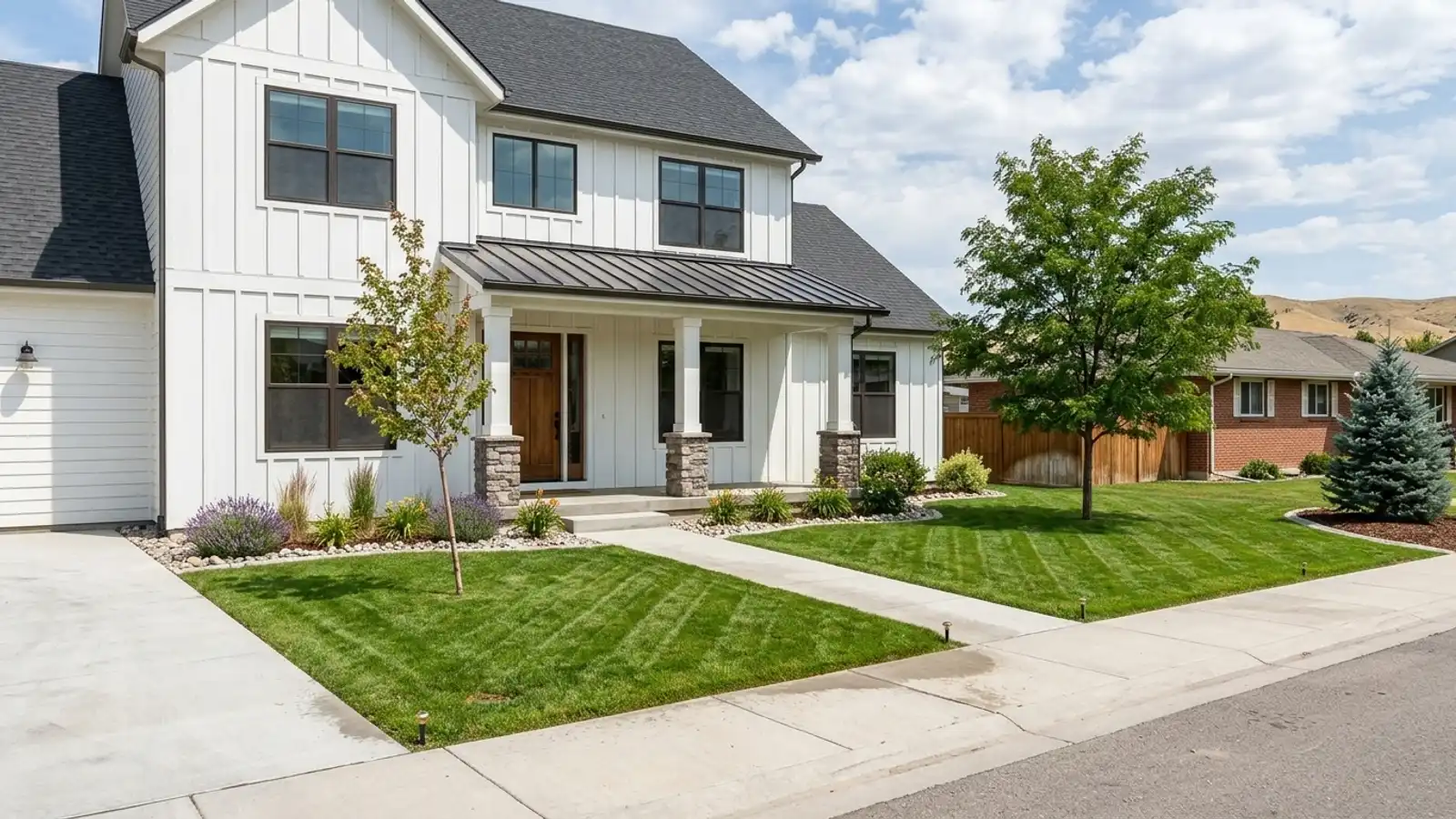
Eagle sits on the Treasure Valley floor in a semi-arid climate where dry summers and gray winter inversions shape homeownership more than heavy snow does. The reality of owning a property here comes down to how much yard you want to water and cool from spring through fall.
The local weather pattern directly affects your utility bills, maintenance schedule, and the type of property that makes sense for your budget. Confirming the right HVAC setup, irrigation access, and lot size before you write an offer will save money on upkeep from the first season.
Key Takeaway
Eagle’s weather costs a homeowner more through hot, dry summers and lawn watering than through snow, so the real choice is how much yard you want to keep green. If you want a big irrigated lot, confirm the water setup early and budget for cooling. If you’d rather skip that upkeep, townhomes had 5.6 months of supply in the 90 days ending September 30, 2026, more than double the single-family figure, which leaves room to negotiate.
Who This Guide Is For
You’re weighing a home in Eagle and want to know how the yearly weather will shape daily life, upkeep costs, and the type of home you buy.
What Kind of Climate Does Eagle Have?
Boise and the surrounding Treasure Valley, including Eagle, fall under a cold semi-arid climate classification. Four distinct seasons, yes, but dryness is the defining feature. Official 1991-2020 climate normals for the nearby Boise Air Terminal show average daily highs ranging from 39°F in January to 93°F in July.
Most moisture arrives from late fall through spring, with monthly precipitation peaking around 1.4 to 1.5 inches in January, May, November, and December. Mid-summer is the driest stretch, bringing only about 0.2 inches of rain in July and August. Because the official weather station sits a few miles away, Eagle’s exact readings run close to these normals but aren’t identical.
That semi-arid pattern means yard size and water access are the weather decisions that change a purchase the most. Townhouses offer a lower-upkeep path for buyers who want to avoid summer yard work, while single-family homes require a real plan for seasonal watering.
Summers in Eagle: Heat, Dry Air and Irrigation
Summer afternoons in the Treasure Valley regularly reach into the 90s, with average July daily highs around 93°F. Local reporting based on National Weather Service data shows the area averages roughly 8 to 10 days per year at or above 100°F. About half of all summer days reach the 90-degree mark.
Because summer brings almost no rain, lawns and gardens depend entirely on irrigation. Many properties use pressurized irrigation drawn from canals or the river, which is cheaper for landscaping than using treated city water. You’ll want to confirm which irrigation district or provider serves the lot and whether there’s an annual assessment.
A large lot here is a summer-long watering and cooling commitment, and the water arrangement varies by property. Have the sprinkler system tested during the inspection period, or ask for its last service date. Ask the seller for 12 months of utility bills so you can see what summer cooling and watering cost. You can’t assume the water setup from the listing alone.
Wildfire Smoke and Summer Air Quality
Late summer can bring smoke from regional wildfires into the Treasure Valley, temporarily lowering air quality. Smoke years vary widely, so one clear summer on a visit says little about what the next year might hold. This pattern makes indoor air filtration a standard part of owning a home here.
When you’re touring a property, check the HVAC age and ask for furnace service records. Confirm the system accepts higher-rated filters to handle smoke episodes. Window and door sealing also matter for keeping indoor air clean when outside conditions worsen.
Check the AirNow reading for the Treasure Valley on the day you tour to get a sense of the current baseline. Upgrading an older HVAC system or retrofitting a house for better air sealing is an expense worth identifying before closing, not after.
Winter Inversions and Gray Months in Eagle
Winter in the west end of the Treasure Valley often features a persistent temperature inversion. Cold air gets trapped on the valley floor under warmer air, holding fog, low clouds, and stagnant air in place for days at a stretch. The National Weather Service notes that snow cover keeps these winter temperatures several degrees colder than areas outside the inversion.
The biggest snows and highest-impact winter weather events typically happen when cold air gets trapped at the surface following a protracted inversion. For a homeowner, that means furnace condition, attic insulation, and air filtration matter more than stocking up on snow-clearing equipment.
Check the attic insulation depth and roof age in the inspection report. Inversions are the part of Eagle’s winter that newcomers least expect, and they’re genuinely hard to visualize on a sunny summer tour.
Wind, Thunderstorms and Flood Risk Near the Boise River
The City of Eagle notes that flooding in the city can stem from two main sources: Dry Creek and the Boise River. Spring runoff increases river levels, and some properties near the river or local canals sit in mapped flood zones.
Summer thunderstorms occasionally bring gusty winds and hail, which tests roof conditions and fence lines. Flood zone status is determined address by address, so a neighbor’s insurance requirement doesn’t settle yours.
Look up the property address on the FEMA Flood Map Service Center and get a flood insurance quote before your inspection deadline. A river-adjacent lot can carry a requirement for a separate flood policy, and that’s a number you want before you’re under contract.
How Weather Affects Your Choice Between a Single-Family Home and a Townhouse
Single-family lots bring the irrigated yard, the cooling load, and your own snow clearing. They’re also the tighter segment of the market, with 18.1% of single-family homes selling above list price in the 90 days ending September 30, 2026. That competition means buyers have less time to weigh lot maintenance before making an offer.
Townhouses usually shift landscaping and snow removal to a homeowner’s association. None of the 27 townhouse sales in that same 90-day window closed above list, leaving buyers more room to negotiate the gap shown in the supply figures above. Treat the 27-sale figure as a rough guide, since small samples can swing quarter to quarter.
When looking at townhouses, ask the HOA for current dues and a written list of what they cover: landscaping, irrigation, snow removal, exterior maintenance. You can review home types and HOA details, or check Eagle housing market trends to see how these segments compare. Townhouses trade yard work for HOA rules and dues you don’t control.
Best Time to Tour Homes in Eagle
A summer visit shows whether the air conditioning keeps up, whether the irrigated lawn is healthy, and how afternoon sun hits west-facing rooms. A winter visit reveals inversion haze, driveway slope ice, and how well the house holds heat.
Even in the busy summer quarter, the typical single-family listing sat for a median of 66 days on market in the 90 days ending September 30, 2026. That’s enough time to schedule a thorough irrigation check and a proper HVAC inspection, so don’t rush past those steps.
A single-season visit hides half of Eagle’s weather pattern. Ask sellers about the conditions you can’t see on the day you tour. You can read more about buying a home in Eagle to prepare for the full purchase process.
How to Use Eagle’s Weather to Narrow Your Home Search
Your search should start with one question: how much weather-related upkeep do you want to handle? These four questions help narrow that down.
- Do you want a lawn and garden you’ll water from spring through fall? If yes, review the summer irrigation requirements and the single-family property details. If no, focus your search on townhouses.
- How much do wildfire smoke and winter haze matter to your household’s comfort? If they matter a lot, prioritize the HVAC and filtration checks during your tours.
- Is the home you’re considering near the Boise River, a canal, or a low-lying pond area? If so, review the flood risk and check the FEMA maps before writing an offer.
- Can you tour in more than one season? Property tours in both summer and winter reveal different upkeep needs.
Once you know your maintenance tolerance, you can weigh the other pros and cons of living in Eagle to finalize your location.
At a Glance
- All homes, median sale price: $899,572, up 12.5% year over year (Redfin, 90 days ending 2026-09-30; 310 homes sold)
- All homes, median days on market: 70; sale-to-list 99%; 2.9 months of supply (90 days ending 2026-09-30)
- Single-family, median sale price: $997,053, up 8% year over year (90 days ending 2026-09-30; 280 homes sold)
- Single-family, median days on market: 66; sale-to-list ratio matched the all-homes figure; 18.1% sold above list; 2.6 months of supply; median $350 per sq ft (90 days ending 2026-09-30)
- Townhouse, median sale price: $460,455, up 1.4% year over year (90 days ending 2026-09-30; based on 27 sales, so treat as a rough guide)
- Townhouse, median days on market: 80; same sale-to-list ratio; 0% sold above list; 5.6 months of supply; median $250 per sq ft (90 days ending 2026-09-30; based on 27 sales)
Eagle, ID Weather FAQs
What Is the Weather Like in Eagle, Idaho Year Round?
Eagle experiences four distinct seasons, featuring dry and sunny summers followed by gray inversion spells in the winter. NOAA comparative climatic data lists Boise’s mean annual percent of possible sunshine at 64%. You can read the summer and winter sections above for details on how these patterns affect home maintenance.
What Are Winters Like in Eagle, Idaho?
Winters are cold and often gray due to valley inversions, with January standing as the coldest month. Official 1991-2020 climate normals for the Boise Air Terminal show average daily highs of 39°F in January and average lows around 25°F. Snow usually comes in modest events that melt between storms, while persistent inversions keep the air stagnant and cold.
How Much Snow Does Eagle, Idaho Get a Year?
Snowfall at the nearby Boise airport station averages around 20 inches per year, though it can vary from just a few inches to 30 or 40 inches. Because these totals are recorded at the airport, Eagle’s numbers run close but aren’t measured directly on site. The foothills north of town can see slightly higher snow totals.
What Is the Elevation of Eagle, Idaho?
Eagle sits on the valley floor, which gives the city a milder, drier climate than the nearby mountain towns. You can confirm the exact elevation on USGS topographical maps, but this lower position keeps winter temperatures warmer than in the higher elevations.
Is It Humid in Eagle, Idaho?
No, the area is generally dry, with low summer afternoon relative humidity. That lack of moisture makes the summer heat feel drier and more manageable. In winter, some households add humidifiers to counter the dry indoor air.
Does Eagle, Idaho Get Tornadoes or Severe Weather?
Severe weather is uncommon but possible. Using NOAA Storm Events Database data through 2023, Ada County recorded 6 tornadoes since 2000, which equates to about 0.57 tornadoes per 100 square miles. The area also sees occasional summer thunderstorms with wind and hail, and you should check the flood-risk section above for information on river flooding.
Is the Weather Pattern in Eagle, Idaho Changing?
Yes, long-term data shows a warming trend. Per NOAA’s 2025 State Climate Summary for Idaho, annual average temperatures have increased about 2°F since the beginning of the 20th century, and 2015-2024 was the warmest decade on record. That includes a significant decline in very cold nights since the 1990s, while the number of very hot days has varied since 2000 with no overall trend.
Is Eagle, ID a Good Place to Live?
The local weather pattern suits buyers who want four seasons, dry summers, and modest snow, though smoke and inversion periods are real trade-offs. You can read more about the pros and cons of living in Eagle to get the full picture of the area.
Sources
- Redfin: Data Center
- NOAA: 1991-2020 Climate Normals
- Climate-Data.org: Boise Climate
- KTVB: Triple-digit days
- National Weather Service: Boise Climate Summary
- City of Eagle: Floodplain Information
- Western Regional Climate Center: Comparative Climatic Data
- Local News 8: Idaho Tornadoes
- NOAA NCICS: State Climate Summaries
Social Cookies
Social Cookies are used to enable you to share pages and content you find interesting throughout the website through third-party social networking or other websites (including, potentially for advertising purposes related to social networking).