

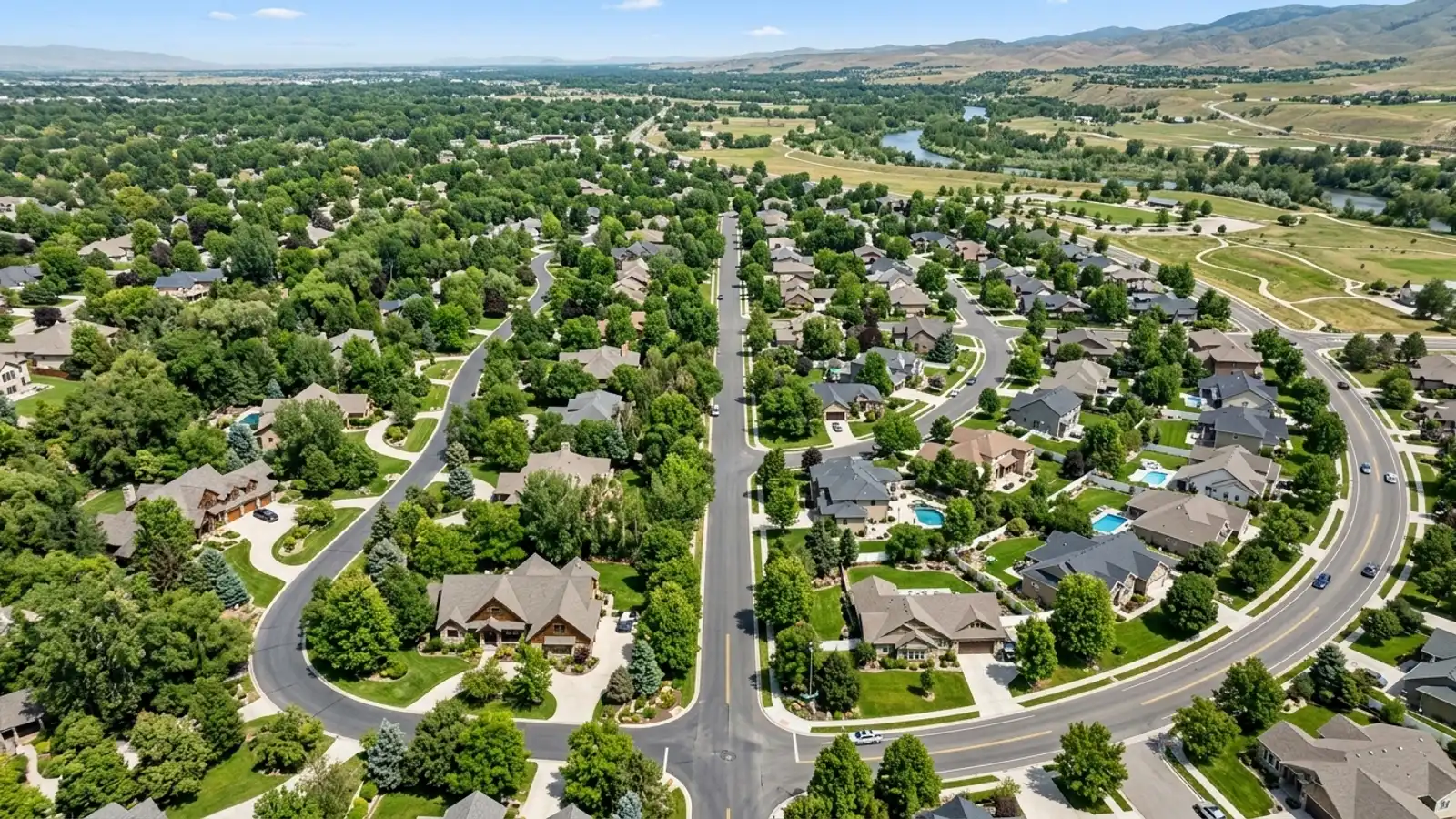
Eagle, ID sits about ten miles northwest of downtown Boise in Ada County, and it’s grown steadily enough that its 2026 population is projected at roughly 35,112 residents. That’s not a small town anymore – it’s a city with real infrastructure, real traffic, and real competition for the right house.
Buyers shopping the 83616 ZIP code will find larger lots, proximity to outdoor recreation, and prices that reflect both of those things. Before you schedule your first tour, it helps to understand what the inventory looks like and where pricing has settled heading into 2026.
The Eagle Housing Market at a Glance
The median sale price in the Eagle housing market is roughly $874,500 as of mid-2026 – up 5% from the same point last year. That’s not a dramatic spike, but it’s not nothing either. Homes are averaging about 53 days on market before going under contract, and with nearly 300 active listings and a 3.3-month supply of inventory, you’ll have room to look around without feeling like you need to write an offer on the first thing you walk through.
Median Home Prices and Trends
The average sale-to-list ratio is around 98.8%, which tells you those looking to sell in Eagle are pricing close to reality from the start. Only about 11.6% of homes sell above their original list price – so the frantic overbidding that defined a few years ago has cooled considerably. If you’re coming in expecting that kind of market, adjust your expectations. This one rewards preparation over panic.
Inventory and Competition
272 home sales were recorded in a single recent quarter, so transaction volume is holding steady. The 3.3 months of supply puts this market in roughly balanced territory, though it tilts slightly toward sellers. If you’re shopping below the median, expect things to move faster. Luxury properties tend to sit longer – buyers at that price point are pickier, and that’s not a problem for them.
Types of Homes and Price Ranges
Eagle’s housing stock is dominated by single-family residences, and many of its subdivisions feature larger lots and custom builds that you won’t find in the same concentration elsewhere in the Treasure Valley. The overall median sits well above the national average, but the market does include a range of property types – from acreage to newer townhome developments – so your options aren’t as narrow as the median might suggest.
Single-Family and New Construction
New construction is a significant piece of the Eagle market. Subdivisions like Legacy and Foxtail Square are actively building, with modern floor plans and the appeal of nothing previously lived-in. What buyers sometimes don’t account for is that landscaping and fencing aren’t always included in the base price. Negotiating with a builder also works differently than buying a resale – it’s not better or worse, just a different conversation.
Condos, Townhomes, and Entry-Level Options
If you want an Eagle address without the commitment of a large yard, condos and townhomes are worth a look. They generally list below the city’s $874,500 median, though the attached housing inventory is smaller than the single-family segment. When something good comes up in this category, it doesn’t wait around – monitor listings and be ready to schedule a tour the same day.
Where to Buy: Neighborhoods in Eagle
Eagle has a lot of distinct subdivisions, and many of the best neighborhoods in Eagle are built around a specific amenity – golf, water access, trails, or some combination. Banbury Meadows and Ashbury draw buyers who want golf course living. Riverstone offers a gated lake community. Two Rivers and The Shores are known for walking paths and water access. Where you land should come down to your commute, your lot size priorities, and how much you actually want that amenity you’re paying for.
Popular Subdivisions
Established neighborhoods like The Preserve, Laguna Pointe, and Alderwood Village offer mature landscaping and straightforward access to local roads. On the newer side, Settlers Bridge, Lochsa Falls, and Arrano Farms bring different architectural styles and community layouts. HOA rules vary considerably between subdivisions – that’s not a minor detail, and it’s worth understanding before you fall in love with a property.
Areas Near Parks and Landmarks
Properties near the Eagle Historic District put you close to local shops and the Eagle Historical Museum, and the area carries a traditional downtown feel that reflects the city’s agricultural roots. Buyers with outdoor recreation at the top of their list often focus near Eagle Island State Park – situated along the Boise River, it offers trails, swimming, and paddleboarding just minutes from residential streets.
Location, County, and Getting Around
Eagle is in Ada County, bordered by Boise, Meridian, and Star. The entire city falls under a single primary ZIP code – 83616. State Highway 44 and the Boise River corridor define how most people move through the area day to day.
Distance to Boise and the Nearest Airport
Downtown Boise is about ten miles southeast of Eagle. Depending on traffic along State Street or Chinden Boulevard, you’re looking at 20 to 30 minutes. The nearest airport is the Boise Air Terminal – also known as Boise Airport (BOI), or Gowen Field – sitting roughly 15 to 20 miles away with commercial service.
Cost of Living and Lifestyle
The median household income in Eagle is approximately $122,894, with an average per capita income of $72,314. Those numbers track with a city where housing costs run well above the Idaho average. Niche assigns Eagle a Cost of Living grade of C-minus, and median rent runs around $1,765. As you weigh the pros and cons of living in Eagle, factor that baseline into your long-term budget – the mortgage is only part of the picture.
Income Requirements and Daily Expenses
Buying near the $874,500 median takes a solid down payment and qualifying income. Get your debt-to-income ratio reviewed by a lender before you start touring homes – not after you’ve already found one you want. Beyond the mortgage, you’re looking at property taxes, utilities, and potential HOA dues. Day-to-day expenses like groceries and gas generally track with the broader Boise metro.
Population Growth and Climate
The 2020 census put Eagle at 30,346 residents. Current projections show roughly 35,112 by 2026, reflecting a 1.3% annual growth rate – steady, not explosive. The climate is four distinct seasons: hot, dry summers and cold, snowy winters. Plan for it. Winterizing sprinkler systems and servicing HVAC units aren’t optional in a place with real temperature swings.
Finding a Real Estate Agent in Eagle, ID
A 53-day average listing time gives you a little runway, but this market still moves on good properties. The best real estate agent in Eagle can surface listings before they show up on the major portals and will understand the specific quirks of local subdivisions – HOA boundaries, lot line variations, which streets see more cut-through traffic. They also handle the coordination between you, the seller, and the title company so that piece doesn’t fall apart at the end.
Choosing a Local Professional
When you choose a buyer agent in Eagle, look for professionals who have recently closed deals in the 83616 ZIP code. That’s not arbitrary gatekeeping – it means they know what homes are actually selling for in specific neighborhoods, not just what Zillow says. Interview more than one. Ask how they prefer to communicate and whether they work solo or as part of a team. Neither answer is automatically better, but you want to know what you’re signing up for.
Questions to Ask Before Hiring
Ask about experience with the specific property type you’re targeting – new construction and acreage purchases each have their own wrinkles. Ask about weekend availability, and ask them to walk you through how they’d approach structuring a competitive offer in this market. If they can’t answer that last one clearly, keep looking.
The Home-Buying Process in Idaho
Idaho real estate transactions follow state-specific laws and standard contract procedures. The process starts with financing, not property tours – or at least it should.
Getting Pre-Approved
A lender looks at your income, credit history, and current debts to issue a pre-approval letter. That letter tells sellers you can actually close. It also gives you a realistic ceiling on what you can spend and a rate estimate to plan around. Sellers in Eagle expect to see it with any formal offer – don’t show up without it.
Inspections and Closing
Hire a licensed inspector to look at the roof, foundation, plumbing, and electrical. The report will surface deferred maintenance or safety issues that affect your negotiating position or your decision to proceed at all. Closing means signing final loan documents and moving funds through a title company. Once the deed is recorded with Ada County, the keys are yours.
Frequently Asked Questions
Is it better to buy a home in Eagle or Meridian, Idaho?
It depends on your budget and lifestyle preferences. Eagle generally features higher median home prices, larger lots, and a quieter atmosphere. Meridian offers more commercial development, faster access to Interstate 84, and a wider range of entry-level housing options.
Are property taxes higher in Eagle compared to the rest of Ada County?
It depends on the specific tax districts overlapping your property. While Eagle’s home values are generally higher than the county average – leading to higher overall tax bills – the actual levy rates vary based on local school bonds, fire districts, and municipal services.
Do I need flood insurance if I buy a house near the Boise River in Eagle?
It depends on the property’s exact location on the FEMA flood map. Homes situated in designated high-risk flood zones along the Boise River or near Eagle Island State Park will require flood insurance if you are using a federally backed mortgage.
How do irrigation water rights work for acreage properties in Eagle?
Many properties in Eagle come with surface water rights managed by local irrigation districts. Homeowners pay an annual assessment to the district, which provides untreated water for landscaping and agricultural use during the summer months.
What are the minimum down payment requirements for jumbo loans in Eagle’s housing market?
It depends on the lender, but most require at least 10% to 20% down for a jumbo loan. With Eagle’s median sale price around $874,500, many single-family homes exceed standard conforming loan limits, making jumbo financing a common requirement.
How long does it typically take to close on a house in Eagle right now?
It typically takes 30 to 45 days to close a financed purchase in Eagle. Cash transactions can close much faster, often within two weeks, since they bypass the mortgage underwriting and appraisal steps.
Social Cookies
Social Cookies are used to enable you to share pages and content you find interesting throughout the website through third-party social networking or other websites (including, potentially for advertising purposes related to social networking).