

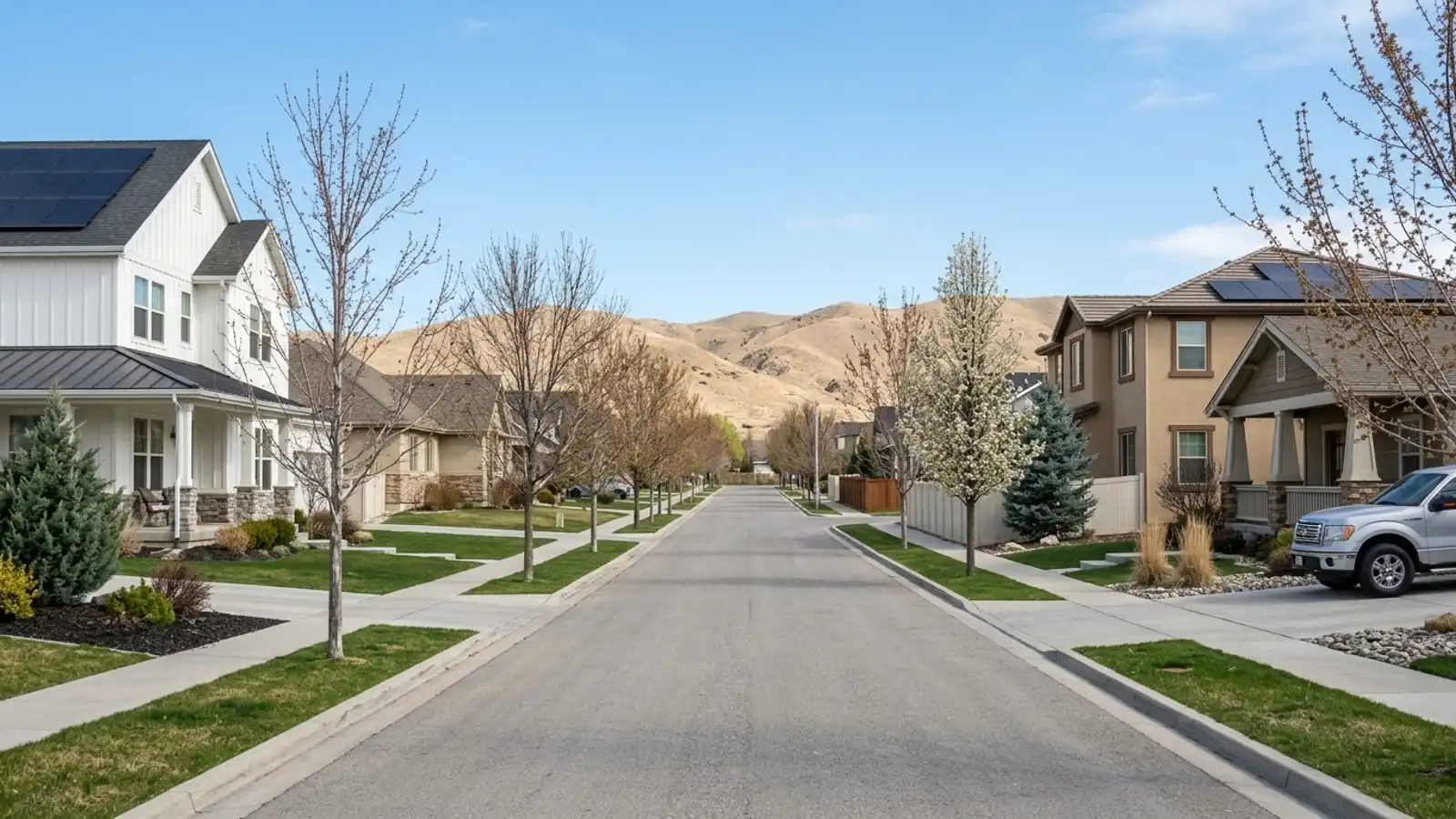
Utility accounts in Eagle, ID, are tied directly to the parcel you buy, not the city name on the mailing address. Two homes on the same street can have completely different water and sewer setups, paying different rates to different entities.
The specific water, sewer, power, and gas providers for a home determine what bills to expect each month. These providers also determine who you call for repairs and whether you face seasonal assessments for irrigation.
Key Takeaway
In Eagle, start with the exact address. Whether water comes from the city, a private company, or a well, and whether sewer is a district line or a septic tank, drives most of the difference in your monthly bills. If you want time to verify every bill and HOA statement before you commit, townhouses currently allow it, with 5.6 months of supply in the 90 days ending September 30, 2026.
Who This Guide Is For
You’re weighing a specific Eagle home and need to know which utilities serve that address, roughly what they’ll cost, and what to verify before you make an offer.
Who Provides Utilities in Eagle, ID?
Utility costs in Eagle are set by the parcel, not the city name. Water can come from the City of Eagle, a regulated private company, or a private well. Sewer can come from the Eagle Sewer District or a septic tank. Irrigation is often a separate seasonal assessment. Confirm every provider and get 12 months of bills before committing.
The current market gives you room to do that research. In the 90 days ending September 30, 2026, 310 homes sold across the city, and single-family homes took a median of 66 days to sell.
As you weigh a property, a few questions matter up front. Is the address inside Eagle city limits or in unincorporated Ada County? That determines your water and trash options. Does the listing show municipal water and sewer, or a well and septic? Does the lot have pressurized irrigation from an HOA or irrigation district? Are you choosing between a townhouse and a single-family home? The answers will shape your monthly carrying costs more than almost anything else. These carrying costs directly impact the monthly budget for anyone researching the pros and cons of living in Eagle.
Water, Sewer and Irrigation in Eagle
Water and sewer are the most localized utilities in the area. The provider changes based on neighborhood boundaries, city limits, and when the subdivision was built.
Some homes get a single water bill; others pay separate entities for drinking water, sewer, and lawn irrigation.
City of Eagle Water
The City of Eagle Water Department runs a municipal system serving roughly 3,300 to 3,800 households in specific subdivisions, including Arvory Crest and Bald Eagle Point. Monthly bills include a consumption charge, a base fee, and a state safe drinking water fee. You can call the department with an address to confirm whether it falls in their service area.
Being inside city limits doesn’t guarantee city water. Some in-city neighborhoods are served by a different operator, so a buyer who assumes municipal water can be wrong about both the bill and who to call.
Private Water Companies, Including Eagle Water Company
Some Eagle neighborhoods get water from private companies regulated by the Idaho Public Utilities Commission. Eagle Water Company, for example, was acquired by Veolia Water Idaho. Under an approved settlement, existing Eagle Water customers’ rates increase roughly 8.33% each year until they reach full parity with Veolia’s rates.
Private water rates in Eagle are approved by the state utilities commission, not the city. Rate changes come through commission filings, so check for any pending rate cases before assuming today’s bill will hold.
Private Wells
Larger-lot and outlying properties often use private wells. There’s no monthly water bill, but the owner pays for testing, the pump, the pressure tank, and any treatment systems. Central District Health recommends testing well water at least once a year for bacteria and nitrates and charges $142 for a private water sample collection. Request a recent bacteria and nitrate test as part of the purchase, and ask whether your lender requires one.
The owner carries all the risk. A failed pump or a bad water test becomes your repair, with no utility department to call.
Eagle Sewer District
Sewer service in the area is billed by the Eagle Sewer District, a separate entity from the City of Eagle. The district charges a flat $45 per month for residential sewer service. It requires its own bill and its own phone call when you move in.
New connections, such as a lot coming off a septic system, carry district connection fees, which currently sit at $8,916 per equivalent residential unit.
Septic Systems
Properties outside the sewer district’s lines use septic systems, permitted through Central District Health. There’s no monthly sewer bill, but owners pay for periodic pumping and inspections. Central District Health charges $2,250 for a new or repair onsite septic permit. Ask the seller for the septic permit and the last pumping record, and order an inspection during your due diligence period.
A drain field problem found after closing is expensive and entirely yours. The upfront inspection matters much more than the absence of a monthly bill.
Pressurized Irrigation
Many Eagle subdivisions water lawns with untreated canal water through a pressurized system. This shows up as a seasonal HOA charge or an irrigation district assessment, not on the standard water bill. Using it keeps your summer water bill down, since watering a lawn with treated drinking water is costly.
The water shuts off outside the irrigation season, and the assessment is typically due whether or not you use it. Ask the seller or HOA for the annual amount, who pays it, and the exact season dates.
Electricity, Natural Gas, Trash and Internet in Eagle
Power, gas, and trash collection are more uniform across the area than water and sewer. Most addresses rely on the same major providers for electricity and natural gas, provided the lines reach the property.
Internet and trash collection depend on your exact location. Being inside or outside city limits changes how refuse is handled, and fiber internet availability varies block by block.
Idaho Power
Electric service for Eagle addresses comes from Idaho Power, which charges a $15 monthly service fee. Residential electric rates are higher in the summer than the rest of the year. The summer season runs from June 1 through September 30, bringing higher energy charges per kilowatt-hour; the non-summer season covers October through May.
Summer cooling drives peak bills, so a seller’s spring electric statement understates what July will cost. Ask for the full 12 months.
Natural Gas and Propane
Intermountain Gas serves much of the area, listing Eagle in its Ada County service territory. As of January 2026, the monthly residential customer base charge is $11. Some outlying or foothill properties run on propane instead of natural gas. Confirm whether the home has a gas meter or a propane tank.
With propane, find out whether the tank is owned or leased. A leased tank can tie you to one specific supplier and their pricing structure.
Trash and Recycling
Inside city limits, curbside trash runs under a city contract. Hardin Sanitation provides weekly residential trash and recycling collection, billed quarterly. Residents outside city limits must arrange their own waste collection directly with a hauler.
Inside the city, you generally don’t choose your hauler. Outside city limits, you set the service up yourself, and the price may differ from the municipal contract rates.
Internet
Coverage varies by street. Check the exact address on the FCC National Broadband Map before relying on a specific property for remote work. A provider’s general marketing area isn’t the same as guaranteed service at your parcel.
Utility Costs for Single-Family Homes vs Townhouses
The type of home you buy determines which utilities you manage directly and which ones an association handles. A larger lot brings more individual systems to maintain.
Total carrying cost includes utility bills, HOA dues, and seasonal assessments together. How much time you have to gather those numbers depends on where the market sits right now.
Single-Family Homes
With a median sale price of $997,053 in the 90 days ending September 30, 2026, the monthly utility bill is a small share of the total payment for a single-family home. Lot-driven costs, though, add up: the irrigation assessment, well and septic upkeep, and cooling a larger home. A median 66 days on market means there’s usually time to ask for 12 months of bills before you sign.
If you want a yard and irrigation, start with single-family homes that have pressurized irrigation confirmed in writing. You can review Eagle housing market trends for more on pricing. Every system on the lot is yours, including the well, septic, and irrigation lines. Utility bills alone understate what a single-family home costs to run.
Townhouses
Townhouse HOA dues may cover some exterior water, irrigation, or trash collection. Ask the HOA in writing exactly what the dues include. In the 90 days ending September 30, 2026, 0% of townhouses sold above list price, based on 27 sales.
That gives you real negotiating power to make HOA statements and utility bills a condition of your offer. You can read more about HOAs and home types in the area. What dues cover today can change by a board vote, and shared or master-metered utilities can make your individual share hard to see. Read the budget and the last two years of minutes carefully.
How to Check Utilities Before You Buy in Eagle
Listings often contain errors on water sources and waste systems. A direct check of the utility providers for a specific address tells you exactly what you’re buying.
A quick check on the exact address protects you from unexpected connection fees or missing services. A set process helps you gather the right documents before closing.
Step 1: Confirm Whether the Address Is Inside Eagle City Limits
Use the Ada County Assessor’s online property search tool to look up the parcel. The assessor provides a city limits boundary map that shows exactly where the municipal lines fall. City limits determine your trash service and whether city water is even a possibility. You can review Eagle ZIP codes to see how mailing addresses overlap with city boundaries.
The 83616 ZIP code covers more than the city itself. A mailing address isn’t proof that you’ll receive city services.
Step 2: Read the Listing and Disclosures for Water, Sewer and Irrigation
Find the stated water source, sewer or septic status, and any irrigation rights in the seller disclosures. If you want to avoid owning a well and septic system, start with listings showing municipal or company water and Eagle Sewer District service, then confirm each utility with the provider by address.
Listing fields are typed in by people and can be wrong. Treat them as a starting point, not confirmation.
Step 3: Ask for 12 Months of Utility Bills
Ask the seller for a full year of bills for every account so you can see the summer cooling and winter heating peaks. Add the annual irrigation assessment and divide by 12 for a monthly carrying figure. That calculation replaces any broad average with the real numbers for that house.
The previous owner’s habits aren’t yours. Household size, thermostat settings, and lawn watering routines can move the numbers either way.
Step 4: Transfer or Open Accounts Before Closing
Call each provider with your closing date. Ask about deposits for new accounts and how irrigation assessments are prorated at closing. You can review closing costs and prorations to see how these settle on the final statement.
Some providers need lead time or a deposit. Waiting until move-in week can leave you without water, power, or trash pickup for days. Traci Odem’s team can help you track down these providers and ensure everything is verified before you reach the closing table.
At a Glance
- All homes: median sale price $899,572, up 12.5% year over year (90 days ending 2026-09-30)
- All homes: 310 sold, 99% median sale-to-list, 2.9 months of supply, 296 listings in inventory (90 days ending 2026-09-30)
- Single family: median sale price $997,053, up 8% year over year, 280 sold (90 days ending 2026-09-30)
- Single family: median 66 days on market, 2.6 months of supply, 18.1% sold above list, $350 median price per square foot (90 days ending 2026-09-30)
- Townhouse: median sale price $460,455, up 1.4% year over year, based on 27 sales, so read with caution (90 days ending 2026-09-30)
- Townhouse: median 80 days on market, 5.6 months of supply, 0% sold above list, $250 median price per square foot, based on 27 sales (90 days ending 2026-09-30)
Eagle, ID Utilities FAQs
What Is the Average Cost of Utilities in Eagle, Idaho?
Utility costs depend entirely on the address and the providers serving it. According to the U.S. Energy Information Administration, Idaho’s 2024 average monthly residential electricity bill was $108.73, based on average monthly consumption of 944 kWh at an average price of 11.52 cents per kWh. The seller’s 12 months of bills are the real number for that home.
Where Does Eagle, Idaho Get Its Drinking Water?
The City of Eagle Water Department issues separate annual Consumer Confidence Reports for its Eastern Zone, Western Zone, Avimor, and Valnova systems. The Eastern Water System is a pressure-zone groundwater system, and the Western Water System consists of two wells for which the city is responsible. You can find the latest reports on the city’s water department website.
What Is the Household Hazardous Waste Schedule for Eagle, Idaho?
Ada County Solid Waste Management operates a permanent, year-round facility at the Ada County Landfill for disposal of household and small-business hazardous wastes, rather than a periodic mobile collection schedule for Eagle specifically. Confirm current drop-off dates and hours on the county site before making the trip.
Does Ada County’s Household Hazardous Waste Program Take Old Gasoline?
Yes. At the Ada County Landfill Household Hazardous Waste Facility, which is open Fridays and Saturdays from 8:00 AM to 6:00 PM, residents may bring up to 5 gallons of gasoline. Old gasoline is listed as a hazardous material with a 5-gallon maximum, and only household quantities are accepted. Confirm these limits with the facility before driving it over.
How Much Does It Cost to Switch from a Well to City Water in Eagle?
The City of Eagle does not publish a separate private well conversion fee. A property connecting to the city’s water system would pay the same new-connection charges as any new residential service, which includes an $8,032 Capitalization Fee per Equivalent Dwelling Unit and a meter fee based on size, such as $723 for a 3/4-inch meter. A line must reach the property, and the provider must confirm availability and the extension cost for that address.
Do You Pay for Well Water and Septic in Eagle?
There’s no monthly water or sewer bill, but there are recurring costs. Central District Health recommends testing well water at least once a year for bacteria and nitrates and charges $142 for a private water sample collection, while an onsite septic permit is listed at $2,250. Get local quotes for routine septic pumping and water testing.
Is Eagle, Idaho Expensive to Live In?
The median sale price for all homes in the area is $899,572, up 12.5% year over year in the 90 days ending September 30, 2026. Utility costs depend entirely on the specific address and its systems. You can review Eagle housing market trends to see how these home values translate to monthly payments.
What County Is Eagle, Idaho In?
Eagle is located in Ada County. The Ada County Assessor’s Office maintains property records and city limits boundaries for the area. The county runs the hazardous waste program, and Central District Health handles the local well and septic permits.
Sources
- Redfin: Data Center
- City of Eagle: Utilities
- Idaho Public Utilities Commission: Veolia Settlement
- City of Eagle: Consumer Confidence Reports
- Eagle Sewer District: General FAQs
- Central District Health: Well Guidance and Water Quality
- Idaho Power: Residential Consumers
- Intermountain Gas: Rates and Tariffs
- BoiseDev: Eagle Trash Contract
- Ada County Assessor: Assessor Data
- Ada County Landfill: Contact & Connect
- Ada County Landfill: Hazardous Waste
- City of Eagle: Pre-Application Meetings
- U.S. Energy Information Administration: Electricity Rates
Social Cookies
Social Cookies are used to enable you to share pages and content you find interesting throughout the website through third-party social networking or other websites (including, potentially for advertising purposes related to social networking).