

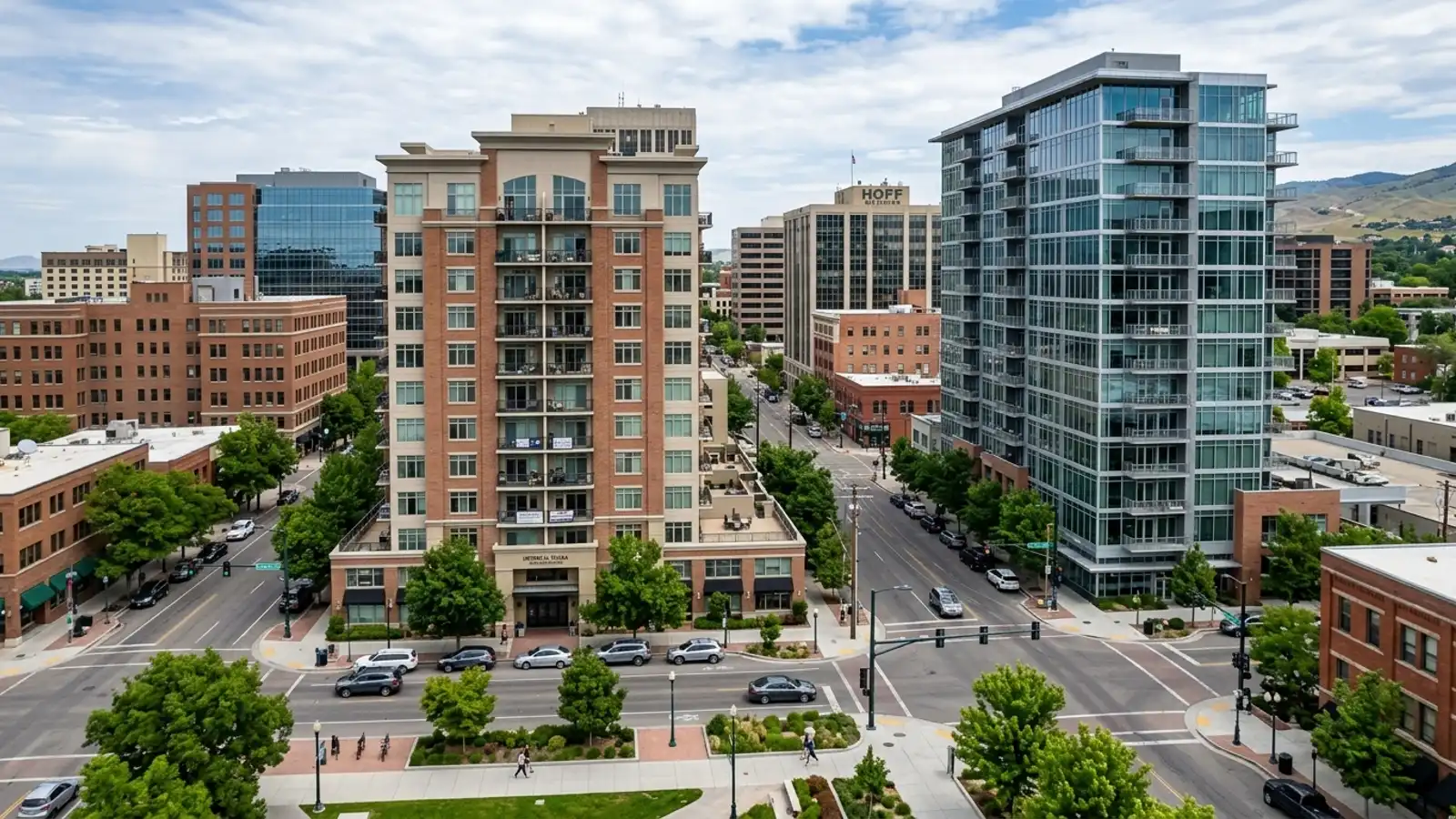
Boise’s attached housing market moves quickly. As of mid-2026, the median sale price in the area sits around $534,700, and homes are spending roughly 11 days on the market before going under contract – so if you are buying a home in Boise and find something that fits, you don’t have a lot of time to think it over.
Buyers looking beyond traditional detached houses will find a genuine mix out there: downtown high-rises, riverfront units, suburban townhomes. Which one makes sense for you comes down to your budget, how much maintenance you want to deal with, and where you need to be in the Treasure Valley on a daily basis.
Boise Condo Prices and Current Market Trends
Condo prices in Boise cover a lot of ground depending on where the building sits and what it offers. The median sale price for condos and co-ops reached roughly $534,700 in June 2026 – up nearly 3% over the previous year. You might also see averages closer to $400,000, which reflects the mix of suburban units pulling down the numbers against downtown luxury listings.
Downtown condos have held strong occupancy rates despite higher mortgage rates, which tells you buyers are still prioritizing location. Established neighborhoods like the North End and East Boise tend to hold their value because people want to be there – and that demand doesn’t really soften.
Active Condo Inventory
The number of available units shifts daily and looks different depending on which platform you’re searching. In August 2026, active listings for condos, townhouses, and apartments range from about 40 to nearly 200 depending on the search portal you use.
The broader market has around 440 homes available with just 1.3 months of supply. That’s tight. When something good hits the market, it doesn’t sit.
HOA Fees and What They Cover
HOA dues are part of the real monthly cost of owning an attached property, and they deserve the same attention you’d give a mortgage payment. General Boise-area HOA fees for condos and townhouses typically run $250 to $500 per month.
They tend to run higher than fees in single-family neighborhoods because they’re covering shared structural maintenance, exterior insurance, and common area upkeep – costs that get spread across all the owners. Downtown buildings often charge more on top of that for amenities and elevator maintenance.
Fees in Specific Buildings
High-rise complexes in the city center set their own fee structures, and the numbers can surprise buyers who haven’t looked closely. Monthly HOA fees at the Imperial Plaza Condominiums, for example, range from $523 to $543.
Before you close on anything, pull the HOA’s financial documents and look at the reserve funds. You want to know the association has enough capital to cover a roof replacement or major repair without turning around and hitting owners with a special assessment the following quarter.
Neighborhoods and Condo Buildings to Consider
Where the building sits determines what kind of attached home you’re actually getting. The downtown core runs mid-rise and high-rise, while areas like Harris Ranch lean toward newer townhome developments.
Buyers focused on urban living often gravitate toward established downtown structures. Imperial Plaza Condominiums is a 65-unit, 12-story building constructed in 1964 – classic city living with maintenance you can generally plan for.
Luxury and High-Profile Complexes
The downtown Cultural District has newer upscale options worth knowing about. The Afton offers secure parking, modern finishes, and immediate access to the commercial core – no getting in the car to run errands.
Aspen Lofts is another building buyers ask about regularly. It’s got one of the more recognizable residential profiles in the Treasure Valley, and it appeals to buyers who want premium views alongside that downtown access.
Waterfront and Riverfront Options
Riverfront properties carry a premium, and they earn it. Condos near the Boise River Greenbelt put you directly on miles of paved trails without requiring a large private yard to maintain.
Inventory in these corridors stays tight. Units priced correctly don’t last long, so if a greenbelt-adjacent property is on your list, you need to be ready to move when one comes up.
New Construction and Upscale Developments
Developers continue adding new condos and townhomes beyond the immediate riverfront. These newer builds come with modern energy-efficient systems and open floor plans – the kind of thing that’s easier to get in new construction than to retrofit into an older building.
If you’re considering a new build, ask the builder directly about completion timelines and upcoming phases. Getting in early sometimes buys you more flexibility on interior finishes.
Townhomes, Duplexes, and Multi-Family Properties
Condos get most of the attention, but they’re only part of what’s available in Boise’s attached housing market. Townhomes make up a large portion of the inventory and offer multi-level living – often with a small private yard, which matters to a lot of buyers who aren’t quite ready to give that up entirely.
Duplexes and multi-family properties are a different play. Buyers frequently purchase a duplex to live in one half and rent out the other, which helps offset the monthly mortgage costs in a real, concrete way.
Multi-Family Investment Considerations
Buying a multi-family property means doing your homework on existing lease agreements and rental history before you close. If there are tenants in place, you’re obligated to honor those leases.
Townhouses and duplexes also tend to carry lower HOA fees than mid-rise condos – no shared interior hallways, no elevators, less shared infrastructure to maintain. For buyers coming out of renting, that middle-ground structure can make a lot of sense.
Cost of Living and Buying Decisions
Cost of living data on Boise varies depending on who’s measuring it and what they’re counting, so it’s worth knowing what the different sources actually say before you draw conclusions.
RentCafe data from March 2026 places Boise’s cost of living at 4% higher than the Idaho state average and 3% above the national average. Salary.com reports costs are 7% higher than the U.S. average. BEA Regional Price Parity data, on the other hand, puts it 1.6% below the national mark. Same city, different methodology, different answer – which is why I’d tell you to use these as context rather than a verdict.
Who Benefits Most from Attached Homes
First-time buyers use condos and townhomes as an entry point into the Boise market more often than any other property type. The lower purchase price compared to large single-family homes makes qualifying for a mortgage more realistic.
Downsizers and retirees are the other group drawn consistently to attached properties. Giving up the yard and the exterior maintenance frees up time – and money – for other things.
Frequently Asked Questions
What is the average price difference between a single-family house and a townhome in Boise?
The available data places the median sale price for Boise condos and co-ops at roughly $534,700, with some averages closer to $400,000. The provided market reports do not isolate the exact price difference for detached single-family homes, so buyers should review current local listings for direct comparisons.
Which property types in Boise are most affordable for first-time homebuyers?
Condos and townhomes generally offer a more accessible purchase price than large detached houses. With condo averages sitting between $399,950 and $534,700, these attached units allow buyers to purchase in areas like Downtown Boise or Harris Ranch at a lower price point.
What architectural styles are most common in Boise’s historic North End?
The historic North End is an established neighborhood known for its community feel and location. The available market data does not specify exact architectural styles, but buyers will find a mix of older, established homes alongside some attached properties.
Where are most of the condos located in Boise compared to single-family neighborhoods?
Most high-rise and mid-rise condos are concentrated in the downtown core and the Cultural District. Buyers will find prominent buildings like Imperial Plaza, The Afton, and Aspen Lofts in these urban centers, while townhomes are more common in areas like Harris Ranch.
Are there strict HOA restrictions for patio homes and new subdivisions in the Boise area?
Yes – buyers should expect binding HOA rules when purchasing in new subdivisions or attached communities. General HOA fees for condos and townhouses run $250 to $500 per month, and these associations enforce guidelines on exterior modifications and shared maintenance.
How long is the typical wait time to build a new construction home in Boise right now?
The exact wait time depends on the developer and the specific phase of the project. Developers are actively adding new luxury and greenbelt-adjacent units to the market, so ask builders directly for current completion timelines.
Social Cookies
Social Cookies are used to enable you to share pages and content you find interesting throughout the website through third-party social networking or other websites (including, potentially for advertising purposes related to social networking).