

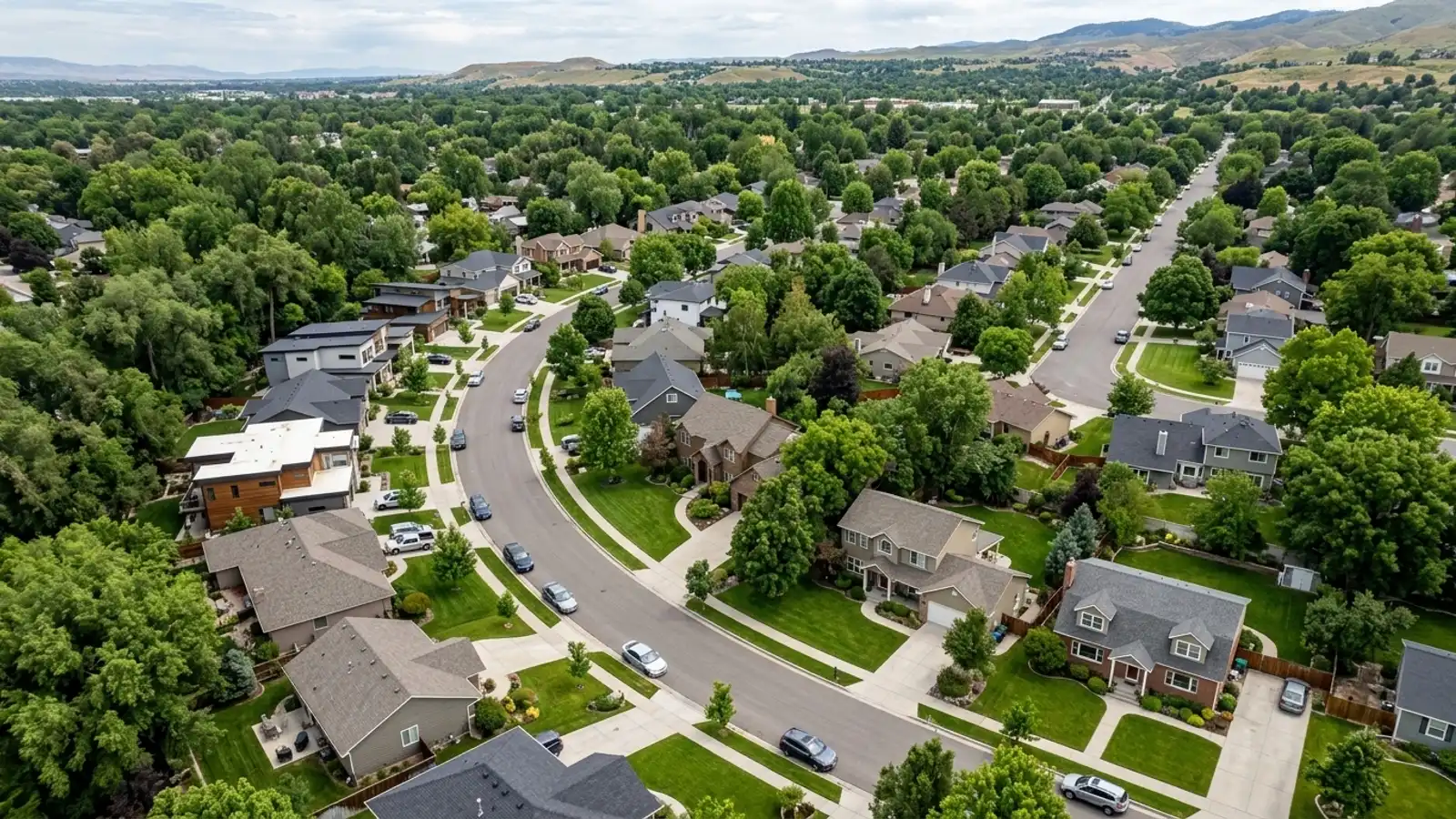
The Boise housing market is settling into something that actually makes sense again. After years of whiplash, the second half of 2026 looks a lot more like a functional real estate market – steady appreciation, homes that move quickly but don’t disappear in a weekend frenzy, and a median sale price around $535,000 that tells you what kind of preparation you’ll need before buying a home in Boise, ID.
Sellers still hold the edge here, mostly because inventory hasn’t caught up with demand. But buyers aren’t walking into the chaos that defined the early 2020s either. If you understand how Ada County actually works right now, you can make a smart decision on either side of the table.
Current Overview of the Boise Housing Market
About 1.3 months of housing supply. That number tells you most of what you need to know. A balanced market sits at four to six months, so Boise is firmly in seller territory – though not in the panicked, sight-unseen-offer territory of a few years back. Data from the Intermountain MLS (IMLS) as of August 2026 shows demand holding steady even as the frenzy has cooled.
The typical listing here gets around three offers and sells right around asking price. Homes go under contract in a median of 11 days. About 34% of homes close above list price – which means sellers who price accurately are doing well, and sellers who overprice are learning the market’s patience runs thin quickly.
Is Boise Favoring Buyers or Sellers?
It’s a seller’s market. Tight inventory is the reason, and that’s not changing fast. When supply sits well below the four-to-six-month threshold a balanced market requires, sellers can often dictate terms – provided the home is in good shape and the price reflects reality.
That said, buyers have more room to breathe than they did a few years ago. The average sale-to-list ratio is just over 100%, meaning you’re generally paying asking price, not launching into a bidding war with $50,000 escalation clauses and crossed fingers.
Comparing Boise to the Treasure Valley
Boise anchors Ada County economically, and its pricing tends to set the tone for the surrounding Treasure Valley. Central Boise – particularly the 83702 zip code – carries a premium that reflects proximity to downtown amenities and employment. Buyers who run the numbers there sometimes shift their search to nearby suburbs, where the price per square foot often drops.
Across the broader metro, though, the same underlying dynamic holds: strong demand, limited supply, prices that respond accordingly.
Median and Average Home Prices in Boise, ID
The median sale price as of mid-2026 is approximately $534,700. Half the homes sold for more, half sold for less – that’s what the median tells you, and it’s a more useful number than most buyers realize. The Zillow Home Value Index puts the average home value slightly lower, at about $508,258.
Year-over-year, median sale prices are up roughly 2.9%. That’s not a bubble number. It’s the kind of steady appreciation that builds equity without making people nervous about a correction.
Breaking Down the Median and Average Cost
The gap between $534,700 and $508,258 reflects what’s selling. Luxury closings can pull an average upward, which is why the median is a cleaner read on what a typical buyer actually spends. Budget around that $535,000 mark for a standard single-family home. Condos and townhomes will get you below it; larger homes in established neighborhoods will push you above it.
Price Per Square Foot and Property Values
Median price per square foot is currently $325, up 5.9% from last year. That matters because it tells you buyers are paying more for the same physical space – location and condition are being priced in more aggressively than the headline number suggests.
It’s also a useful comparison tool. A smaller home near downtown will often run a higher price per square foot than a larger one on the outskirts, and that gap is worth understanding before you decide which trade-off works for you.
Recent Real Estate Trends and Inventory
Active listings are hovering between roughly 1,000 and 1,050 homes, depending on the source. That’s better than the historic lows we saw a couple of years ago, but it still doesn’t meet demand. A recent reporting period logged 440 closed sales – inventory is turning over fast.
The 11-day median days on market is slightly quicker than the 13-day figure from the same time last year. If you’re a buyer, that single number should shape your entire approach to the process.
Tracking Price Changes Over the Past Year
The 2.9% year-over-year increase in median sale prices is consistent and unspectacular – which is exactly what a stable market looks like. It tells current homeowners their equity is moving in the right direction, and it tells buyers that waiting around for a significant price drop isn’t a strategy that’s likely to pay off.
Active Listings and Days on Market
Eleven days is not a lot of time to think. If you’re serious about buying in Boise right now, your pre-approval needs to be done before you start touring homes. Not during. Before.
For sellers, quick turnover means less disruption and a cleaner transaction. But homes that drift past that 11-day median tend to need a price adjustment – the market notices when something sits.
Market Forecast and Predictions for 2026
The rest of 2026 looks like more of the same: tight inventory, stable prices with modest upward pressure, and none of the dramatic swings that defined the early pandemic years. The conditions driving steady value retention – limited supply, consistent demand – aren’t going anywhere quickly, and they’re likely to carry into 2027 barring a major surge in new construction or a sharp move in interest rates.
What to Expect in the Coming Months
Late summer into early fall typically brings a slight dip in new listings as families settle in and aren’t thinking about moving. Buyers may find a bit less competition during that window, though they’ll also have fewer options to choose from. Sellers going to market in the fourth quarter need accurate pricing to catch motivated year-end buyers – that pool is smaller, but they’re serious.
Deciding if Now is the Time to Buy
Trying to time a market growing at 2.9% annually is a losing game for most people. You’re securing today’s price before further appreciation, and the longer you wait, the more of that appreciation belongs to someone else’s equity.
The real question isn’t whether the market is perfect – it never is. It’s whether you’re financially ready and planning to hold the property long enough for Boise’s steady growth to work in your favor.
Affordability and the Cost of Living in Boise
This is where the honest conversation gets harder. The median household income in Boise City is roughly $81,100. The broader Boise Metro Area comes in a bit higher at about $88,700. Stack that against a $535,000 median home price and you can see why affordability keeps coming up.
It’s not an impossible equation, but it requires real budgeting and, for many buyers, a willingness to direct a larger share of monthly income toward housing than the old rules of thumb suggested.
Income Needed to Buy a Home Here
There’s no single income threshold, because it shifts with your down payment, your debt load, and where interest rates are sitting. What’s clear is that buying near the median price requires a household income well above the city’s $81,100 median. Talk to a local lender – they’ll run the actual numbers for your specific situation, which is worth more than any general estimate.
First-time buyers often start by looking at condos or smaller single-family homes. It’s a reasonable way to get into the market when local wages and local prices aren’t exactly moving in lockstep.
Balancing Housing Costs with Local Salaries
Buyers relocating from higher-priced coastal markets often find Boise’s numbers look manageable by comparison, which continues to drive some of the demand here. For buyers already living locally, the math is tighter, and it’s worth working through with a financial advisor before committing to a number.
The local economy supports a range of industries, which is part of what keeps the market’s foundation solid – it’s not a single-employer town betting everything on one sector.
Evaluating Boise as a Place to Live or Invest
Boise draws a wide range of buyers – people relocating for work, people looking for a different quality of life, investors keeping an eye on that 5.9% increase in price per square foot. The fundamentals are real: outdoor recreation, a growing economy, and consistent appreciation tend to hold up under scrutiny.
Whether you’re buying a primary residence or a rental property, the underlying market mechanics are the same ones you want to see.
Real Estate Investment Potential
Tight inventory and steady demand are exactly what investors look for. Rental properties in Ada County don’t tend to sit vacant long, which is the kind of detail that matters when you’re underwriting a deal. Turnkey properties hold their value best in a fast-moving market – homes that need significant work carry more risk when you can’t afford a long holding period before you’re cash-flow positive.
Neighborhood-level data, like trends specific to the 83702 zip code, can sharpen your analysis considerably.
Retiring and Living in the Area
For buyers looking to downsize or transition into retirement, the Treasure Valley has options – single-story homes, low-maintenance condos, and a variety of price points across the metro. A stable, predictably appreciating market is a reasonable place to park retirement assets, particularly for buyers on fixed incomes who don’t want unwelcome surprises.
Practical Tips for Buying and Selling in Boise
Sellers: buyers paying near or above asking price expect the home to be clean, well-maintained, and ready to move into. That expectation is priced into the offer they’re writing. A home that looks like it needs work will get treated like it needs work.
Buyers: know your budget before you start, and be ready to make a decision quickly. When a home gets an average of three offers, sitting on it for a few days to think it over usually means someone else is living there.
Timing Your Sale
Spring and early summer are when transaction volume peaks in Boise – more buyers, more visibility, generally stronger results. Winter listings face less competition from other sellers, but the buyer pool shrinks too. A well-priced home moves in any season. An overpriced one doesn’t, regardless of timing.
Working With a Local Agent
An agent who knows Ada County and works regularly with IMLS data is worth the conversation. Pricing strategy in a market moving this fast isn’t something you want to guess at, and neighborhood-specific patterns don’t always show up in the broad market summaries. Local expertise closes the gap between what a report says and what’s actually happening on a specific street.
Searching for Homes and Listings in Boise, ID
With roughly 1,000 active listings across the city, there’s a real mix to work through – historic homes near downtown, newer construction in the suburbs, everything in between. The inventory exists; finding the right property within it takes a clear sense of your priorities.
Setting up automated alerts through a local brokerage is the practical move. In an 11-day market, waiting to check listings manually means you’re always a step behind.
Single-Family Homes and Condos
Single-family homes are the dominant property type in Boise and consistently the most in-demand. They offer the space and privacy that draw a lot of buyers to Idaho in the first place. Condos are a lower-maintenance alternative – often closer to urban amenities and a useful entry point for first-time buyers or anyone looking to downsize without giving up location.
Exploring Rental Options
If you’re not ready to buy yet, renting in the Treasure Valley is a reasonable way to learn the market before committing. The rental market moves quickly too – applications and deposits ready to go before you tour, not after. Renting also gives you time to figure out which neighborhoods actually fit your life before you sign a mortgage.
Frequently Asked Questions
How much income is required to qualify for a median-priced home in Boise, ID right now?
Qualifying for a $535,000 median-priced home typically requires an income well above the city’s median household income of $81,102. The exact amount depends on your down payment, interest rate, and existing debt. Buyers should consult a local lender to determine their specific purchasing power.
Are buyers still having to waive inspections to win a bidding war in Boise?
No, the market has stabilized compared to the extreme frenzy of past years. While homes do receive an average of three offers and sell in about 11 days, buyers are generally not forced to waive standard protections like home inspections to secure a property.
How long are homes typically sitting on the market in Boise before going under contract?
Homes in Boise are selling very quickly, with a median of 11 days on the market as of mid-2026. This is slightly faster than the 13-day median seen at the same time last year.
Are out-of-state buyers still driving up housing prices in the Boise area?
Out-of-state buyers continue to be drawn to the Treasure Valley, contributing to the steady demand. The current 2.9% year-over-year price growth reflects a more balanced mix of local and relocating buyers rather than massive external spikes.
Which Treasure Valley suburbs offer the best real estate alternatives if I am priced out of Boise proper?
Buyers priced out of central Boise neighborhoods often look to surrounding Ada County communities for more affordable options. These neighboring suburbs share the same strong regional economy but often feature a lower price per square foot.
Are Boise home sellers frequently having to offer concessions or price drops to get their houses sold?
Sellers who price their homes accurately rarely need to offer major concessions, as the average sale-to-list ratio is just over 100%. Homes that sit on the market longer than the 11-day median frequently require a price adjustment to attract an offer.
Social Cookies
Social Cookies are used to enable you to share pages and content you find interesting throughout the website through third-party social networking or other websites (including, potentially for advertising purposes related to social networking).